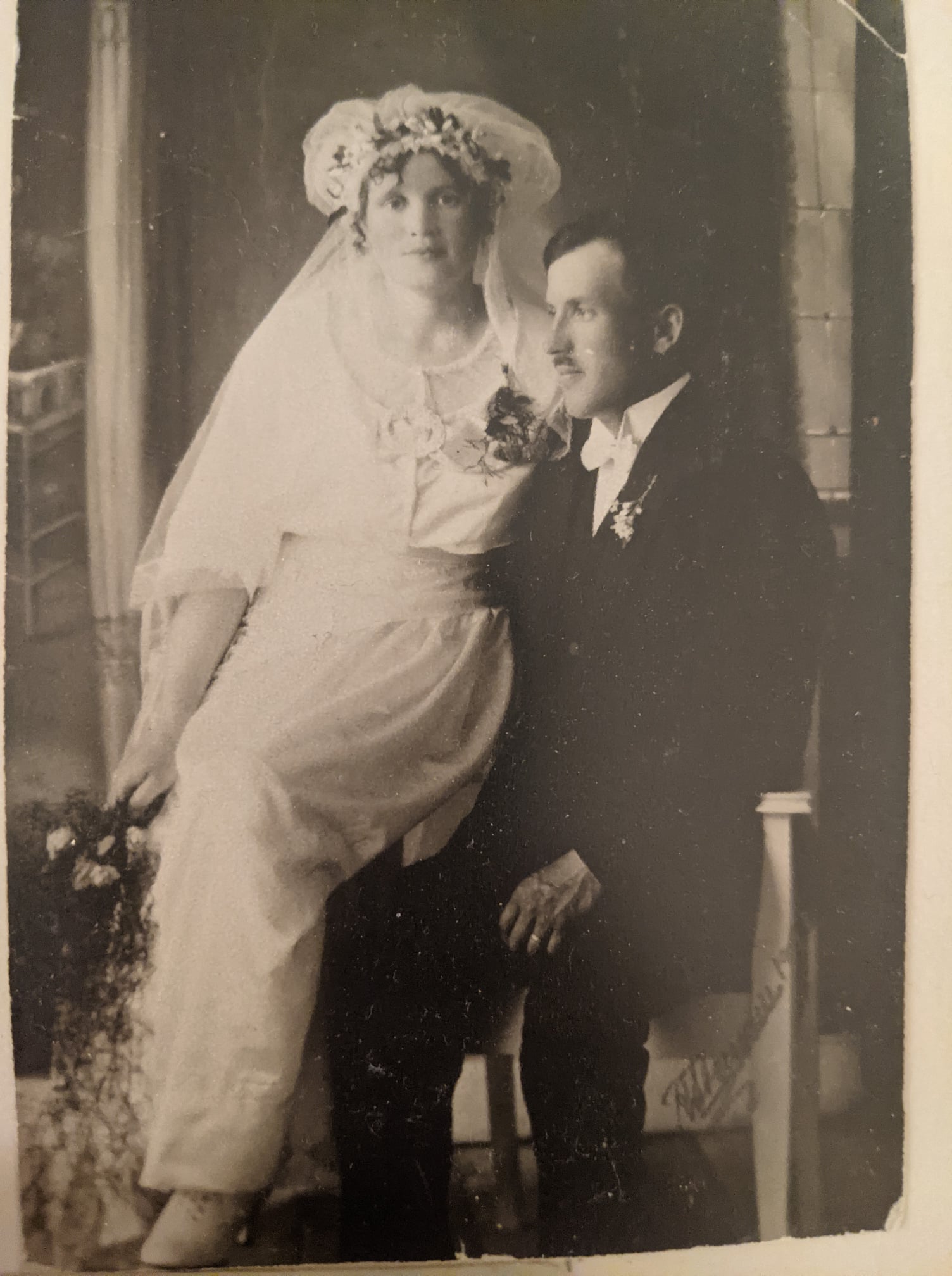
Anders Erik Stenstedt was born in Sweden November 25, 1958. His father (Erik Anders Stenstedt 1924-2007), came from Lappland in Northern Sweden, emigrated to the US in 1951, went back to Sweden, moved to CA, B, Tehran and back to CA. He moved to Sweden 1954-66 with his American wife (Dorothy Harriet Smith), where Anders and his three siblings were born. In 1966, the family moved away from Sweden for the final time. Anders returned in 1983, and spent the summer in Lappland, visiting relatives and family friends, to piece together this history and heritage story of his wanderings and his wandering family.
Anders Erik Stenstedt
andersten1@yahoo.com
Vi flyttade till Amerika 1966. Jag var nästan 8 (åtta) år gammal. När vi bodde i Sverige åkte vi till Kalifornien varje sommar. På den tiden, var det mäst båt transport mellan Europa och Amerika. Jag kommer ihåg båt resan den sommar 1966, när vi flyttade, resan mellan Köpenhamn och New York på båten som heter “Gripsholm.”
MS Gripsholm https://g.co/kgs/rtrbr2
Min mamma, Dorothy Harriett Stenstedt (b. 1930 Dorothy (Dot) Smith) som vanligt, blev skjuk just på början, kräkste up middagn, och hon var sjuk hela resan. Vi hade med oss Fru Karlson som barnvakt och hon hjälpte till mycket.
När vi bodde i Amerika, så skulle vi bli Amerikansk förstås. Sådant, glömmde vi Svenska språk nästan helt och hållit. Vi bodde (både är inte rätt ord) den tiden i Lafayette Kalifornia. Där, min pappa, Erik (1924-2007), även om han var på någon resa det flästa tider, han kunde spela riktig Fotbol (Soccer) och han var riktig duktig på skidåkning.
Även om Jag glömmde min Svenska i Kalifornien, jag tog någa av min Svensk historia. Skidåkning tykte jag var bästa som fanns.
När jag var elva (11) år, då reste jag till Sverige med min pappa (Erik) en sommar. Pappa, han lämnade mig (mej) Blidö (Ö på Stockholm skärgård) med Stenstedt familjen (kusiner med kära Karin) och där skulle jag lära om min Svensk språk. Jag var i Sverige igen sommaren 1974 när min syster, min bror och jag blev konfirmerade i Svenska Kyrkan. Då bodde vi på Mälaren sjön, i en liten små by som heter “Hjo” (se Vättern Sjö i Västdergötoland).
Igen, har jag många historier från den sommar och ifrän min bakgrund men ingen, eller inte någ, tid at berätta. Tack.
Jag var i Sverige igen flera gånger därefter. En gång, i 1983 äfter jag var med på filmen “Hot Dog” gjorde jag släkt forskning om min far och hans familj i Stensele trakten av Norrland, på Ume älven. Det var så kul; där fick jag läsa om livet på gamla tider, där uppe i Norrlands kylet, prata med dom äldre folk, och jag skrev up mycket här som följande.
Det här går ganska bra för mig att skriva upp minnelse. Tack för att du läser.
This book was edited by Gordon William Russell (gordonrussell907@gmail.com)
Introduction – the train back to Lappland
Along with fifty other inter-railers at midnight in Ånge, halfway through Sweden, hoping for a space to rest, I board the luxurious Swedish night train for Norrland. This mid-August, summer- rush-specimen is packed like an Italian train, it yields no space even on the floor. So, I join my pack on a luggage rack, the shelf under the roof across from the bathroom. Here, I find enough place to curl up and rest for a few hours. The conductor complains because he hears my Swedish tongue and wonders how I travel on Inter-Rail in Sweden. I show him my U.S. passport, and he wishes me a good journey.
The seats are full of well organized, vacationing old Swedes, and boys on their way to military stations in Umeå and Boden, they all know to reserve a sitting place. The young Americans tried to book a place, but the small country station couldn’t exchange their pre-bought reservations. They complain loudly when ousted by the conductor. The German groups lie happily on the floor stretching themselves fully, which makes the lavatory inaccessible and my jumping down from my perch a serious risk to them below. The Germans talk louder than the Americans, but with these two groups dominating, Swedish sounds like the foreign language. I content myself with a neck cramp and wait for the four AM stop in Vännäs.
Finally, I stand by the door watching the barren landscape pass. Shivering, I wonder how quickly a town can appear in this wilderness. The train stops and the full daylight disguises the early hour. The boys moving to Umeå for the year of “lumpen” board the rail-bus to the coast. This leaves no more travelers in the station except myself. So, I find a bench in the waiting room and sleep comfortably stretched out until six AM when the train to Storuman attracts a dozen passengers. More forest and marshes along the Ume River, and Lycksele pops up like a piece of the real world. It seems to cling to the river, road, and rails for communication south. And then, I remember the TV and telephone, and Lycksele might live next door to Los Angeles, with a gold mine.
It rains lightly in Stensele, no warmth in the air, and I wonder how long I can last against this climate. A rainy cold weekend in Stockholm after too much train travel and parties in Paris and Bruxelles and my body feels clogged and ready to collapse from cold and fatigue. The schedule says to start with Irene, my Farmor Lilly’s sister. At eighty-six she still has energy to remind me of Lilly the last time I visited, 1976. I continue to the old-folk’s home to visit a cousin of my father’s, Alfred Johanson. He’s getting over a stroke and his wife Elsie treats me like family.
They fix me up with coffee and sandwiches, and a bicycle. Johan Anderson (another relative) across the street has the key to Boxan. For the first week, I rest and simply enjoy the peace of life at Boxan, the old log cabin alongside the Ume River. Reading hard into the history of the world and contemplating my travels, I start to question the potential richness of my family’s history among the trees, rocks, and moss along this river.
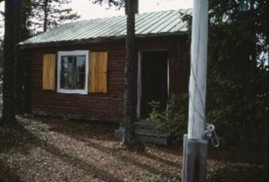
Figure 1: the Boxan cabin, built by Fritz (not 1922)
My Farfar Fritz built the little log cabin “Boxan” with his father, Frans Gustaf Johanson, in 1905. In 1936, they say Fritz moved the old hay storage house or “fäbod” (maybe not, because a fäbod was a cabin for cows, not people) to this jetty or “udde.” For years, he extends and finishes inside and outside
this family summer shelter, only three kilometers from their home in Stensele. Actually, the story goes that one autumn berry picking expedition leaves Lilly and two small children stuck under a tree while thunder and lightning accompany a heavy rain; Fritz forages out to rescue them on his bicycle and decides to begin moving the fäbod next summer. But the big house in Stensele, which Fritz built in 1922, also carries lots of history, and so does his family’s house in Skarvsjöby; and Lilly’s home in Lönnberg proves a wealth for my growing excitement.
I begin with Irene and ask all the questions that come easily to mind in connection with the old family. Continuing with all the relatives that live within range of my borrowed bicycle, I find Henning and Hilda the only remaining family in Lönnberg, waiting for no one to take over the ancient farm. In Skarven, Rolf Robertson lives in a hundred-year-old house and, as he says, the storage shed provided a castle to the early family for most of the 1800s. Knut Fällstam, a younger brother to Fritz, provides stories for me from that side like Irene knows from Lilly’s side. Tora and Kalle Lindahl, also from Skarvsjöby, give me a place to shower and have a good warm meal; since, without electricity and only the coldest of river water, I try to accommodate with cold wash and fire heated food and coffee at Boxan. And I dig deeper into the history, as the story unfolds.
II. Lappland’s History – early settlers
From Lönnberg and Skarvsjöby to Stensele, Stockholm and Göteborg (Gothenburg in English), to San Francisco, Long Beach, Minnesota or Edmonton in Alberta, Canada, the family from the Stensele kommun (socken) spreads to the new world. Those who attack the modern world in Sweden wind up in Stockholm or Gothenburg. But the young today (1983) continue this Lappland exodus. Unemployment, of course, and lack of interest, to compare with the world of books, magazines, and television, make Stensele nothing more than a relic from the past, and nature’s spectacle for the tourist. To accept this old and slow way of life might mean retiring from serious competition. And the modern world doesn’t fit quite right in this wilderness, although, a modern-day care center for the local children, lumber equipment dominating the forest, and cars everywhere, reveal the high standards, evenly spread throughout this region today. But, modern Stensele depresses me, and I grow fascinated with the old lifestyle. The culture, which the stories carry through time, extinguish so easily with technology and cities, but left in their beautiful natural setting. Lappland’s history grows like the wildflower and the forest itself.
The attitude of the old people here shows both pessimism and hope. Irene enjoys all my talk of the new world, though she never escapes her past. She loves to tell me stories of her childhood and brother Arvid who never returned from America. Farfar’s brother Knut sees more of the negative and complains that youth have no concept of real work, no feeling for nature. And I agree that the physical burden of labor can never return to the condition of fifty or a hundred years ago; while the machines roll over the forest, and a man’s duties shift to controlling this amazing power. The contact with nature, however, returns from a modern perspective. As in my life, the next fifty years either frees us from these earthly bonds or moves us backwards and reattaches us to the ways of old, which might be one view. But, before contemplating any future, I feel a need to understand the past; and the lives of these oldsters and their parent’s parent’s stories, speak truer to life than facts and history in my humble opinion (imho).
I return to Sweden less and less as a tourist. My family moved from here to California in 1966. Then, I felt more Swedish than American, now the reverse. For fifteen years, my mother’s family in Texas and California dominated our ancestral understanding. My father, of course, naturalized his citizenship to the United States, and the impetus to forget and ignore the land of our birth grows strong. Inevitably, however, the distant contact breaks into our complacent, new world upbringing and my family maintains excellent opportunity for travel. So, each time I rekindle the family contacts with Sweden, the sense of belonging to these inherited roots carries me to a greater love for the land and its people, more than ever I feel for the capitalist, young, uncultured environment in California, where the sun tries to shine all the time. Sweden grows in me, more like my own, my home, only to conflict with reality, for California and family will always call me back. A longing struggle indeed, and thus, today I write.
The contrast seems less grave than in history because our modern world takes such pride in the speed of distant communications, and flights get cheaper every year. This family Stenstedt, and our blend of old and new world, represents to me a significant piece of international society.
And this story means to join two radically different cultures. Like town and country, science and nature. One might argue that nation states might rule by legal terms, while our global humanity governs our thoughts, linking us to ground Earth, and protective economic, and ultimately capitalist, policies prevail. But for me, as culture and science race to discover the modern and future ideas, this story accepts the findings of the ancient way of life. Competition matches individual against individual, institutions against ideals; but, in these older times, life revolved more naturally around the earth, with God, family and community cooperation. Life today might hold a less physical concept of work, but the family structure holds the same precepts as in the old culture, which gives me the ultimate souvenir to take back with me.
From my travels and sejour in Sweden, I seek to find a sense of roots, a feeling of family. And this paper simply records that which I discovered from interviews, as much scholastic study that my undisciplined and unrefined Swedish permits, and my impressions, my imaginings of a world left behind. I can’t help but think that something was lost in the translations and over time, but still . . .
If I could describe Stensele very simply, along with this whole Swedish background, I use four words: weather, work, family, and religion. The climate rules the environment, especially in Northern Sweden and specifically Lappland. The harsh nature of winter dominates all aspects of life in the region for its extended nine-month season. Fall and winter acts as minor prelude and postscript, while summer leaves only a short respite. It is during these three moths of summer that the farmers prepare to surmount the major hurdle of surviving the coming cold in Lappland. This leaves such a short time that summer’s work here carries the press of the
weather’s rush. Hard manual labor is required here, with only a few tools to relieve the burden of farming this soggy arctic soil, in a real hurry from the time of sufficient thaw until the freezing air sinks through the ground again. Persistent, disciplined, progressive farming must combine with good luck (God’s blessing) to survive devastating blows of nature, like the winter of 1877, so goes the story.
Family, of course, nourishes the work ethic, creating a bonded unit. They work together and for each other. The family extends to the community, though the channels of communication remain minimal. The unit self-perpetuates and adds to the efficiency of the farm itself.
Essential as the work is to survival, work might take precedence to family in order to assure the basic necessary comforts involved with establishing a home. Ultimately and overall, then,
religion pleads to the unknown, the ruler of fate and the Earth. Man’s fragile nature seeks a force, like a supernatural protection. This mutual belief among Swedes in the expanding territories of Lappland, arguably carries over into the heathen “Samer” culture, which lives long before any attempt to colonize in this wilderness. At first, the Lapps resented the emigrants and their strange God, and even today, the Samers cling to their disappearing culture. Among the colonizers, however, the mutual effort to combat the winter, and maintain a church community, maximizes their power. This sense of spiritual and physical strength exists in Lappland at the base of their simple and strenuous, farming spirits.
It becomes even harder to find this basic lifestyle in direct harmony with the flow of nature on this civilized Earth today, I would argue. Only the most remote families and communities retain a routine with such hard work and primitive means of survival, like the Lapps. In our modern world, technology, and machinery, so often replace manual labor, the hard work ethic disappears, and religion follows suit. The need for faith in the powers of the church dies along with any definite use of the extended family. The progressively independent role of the individual in a world working on market economics and growth of capital goods replaces the farming family here and there in the world over. Intellectual pursuits, such as this treatise, may provide comfort, as culture and modern material pleasures substitute for the simplicity of homelife. But families still exist the world over and employ the same principles of work to live. This story shows use of the extended family, now as far apart as the world affords. And maybe, success in this world depends even more on the family, just like the old work ethic, as hard physical labor, and contact with life’s blood, like personal production responsibility, might trail off in the wake of machines. Like technology manipulated to affordable levels, integrating the most primitive homes to relieve the burdens of living, exist but they also sever the soul from the spirit. This old system in Lappland makes passable the road for those who climb out to modern status early. Nevertheless, the rest, left behind, receive their dose of the modern world wherever they stay, seemingly to alienate nature. Those who leave Stensele find the world first, the rest wait patiently, and the world comes to Stensele. To my thinking, this new culture doesn’t seem to fit quite right in old Lappland.
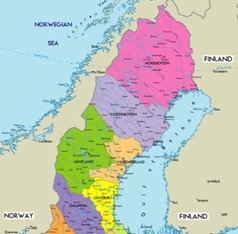
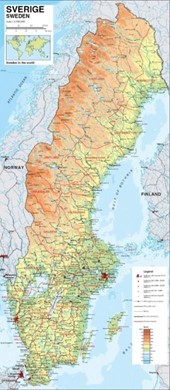
Figure 2: Lappland
From pre-history to stone age and iron age, we find the last of the glacial ice finally melted away from these pre-Cambrian rocks, to form more or less the Swedish coastline. This stretch along the Bothnian Sea runs around from the North Sea and up to 66 degrees latitude and across east and back down the coast of Finland. In the west, Sweden and Norway separate with a mountain range, which comprises most of Norway. The eastern slope of these mountain “fjälls” creates the northern forests of Sweden, three to four times as wide as the Norwegian mountains.
Norway and Finland meet at the northern border of Lappland in Sweden. Overall, Sweden takes the most fertile land and fresh water natural irrigation system of the north (Lappland). This creates the opportunity to expand civilization inland for farming in this northern region in early days. As we see, this desolate piece of wilderness and sub-polar climate, carries the arctic tundra east, down from the “fjälls” and it defines the North as Lappland. The mass of forest one sees in Lappland today begins expanding only after 1880AD or thereabouts. But archeologists find traces of man as far inland as Lycksele as early as 7000BC. So, at least since the Christian era, we might say, civilized man pursues his life’s activities along the immediate coastline in Lappland.
The Vikings of the North, in ancient times, manifest the marinal lifestyle perfectly. They progress within their limited means, innovating newer styles of fishing, boating and warfare along these marinal lines. The Vikings tested fishing and homesteading all along their immediate coasts, spreading their advanced, aggressive naval culture throughout Europe and Asia in the Middle Ages. This expansion proves a massive development for the scale of human communications, like Islam for the North, seven to nine hundred years after Christ (AD).

Figure 3: United Sweden/Finland
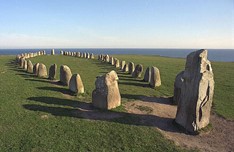
Figure 4: Ales Stenar
The Swedish Vikings spread around the Bothnian, uniting the coastline of Sweden and Finland. They invade and leave settlers down to Smålensk, Russia and farther inland along the Dnepr River down to Kiev, Ukraine. They may even have reached the Black Sea in Siberia, but their settlers stay farther north.
Norwegian Vikes, of course, explore their abundant seacoast protected with the extensive system of fjords. They cross the North Sea to raid the coast of England and Scotland. They leave many settlers on Iceland, a desolate island promising no more than a harsh climate for survival. These tough Norsk Vikings even see the Americas, they say, after invading Greenland and Newfoundland.
The mere distance of these marinal expansions leave the settlers thin of populous power, I guess. And the brunt of Viking cultural contribution remains their successful raids and barborous plundering. “Skål” they might shout raising the conquered and severed skull, filled with hard alcohol, and they salute their victory, so goes the tale. Then, they move on to the next enemy.
The Danish variety of these Viking warriors causes a tremendous fear throughout medieval Europe. They move their warring ships through France and Germany, say the history books, down to the Mediterranean, where they meet up with the armies of Arabia and Islam. Overall, generalizations find that Norsemen mean to colonize, Swedes to trade busily, while the Danes gain fame for their ruthless plunder of sanctified Catholic shrines, where treasure and food lie so conveniently centralized, and they plundered in Asia. But the Vikings spread themselves thinly, and they succumb to the domination of the Christian church, ending the Viking culture with the end of the Middle Ages. Europe then discovers the newest technology in marine travel, and warfare, of course, especially. Spain and England come to dominate. Scandinavia, on the other hand, settles down to the Royal rule of Kings willing to submit to the authority of the Holy Roman Empire, which lasts until the Reformation and the age of Enlightenment. So, wars continually change the look of the entire continent, and Scandinavia succumbs to the power of treaties. Kingdoms grow to command ever larger states, and history balances out the borders in the North until they resemble approximately the present distinctions.
Three Scandinavian countries exist in the 17th Century (Sweden, Denmark, and Finland). Sweden still dominates the Bothnian coast and Finland remains a mix of Slavic and Swede. But for our purposes, the expansion of civilization remains close to the water and south of the Arctic. More than twenty kilometers inland to Lappland, the people of this age might consider the border with wilderness. Not until overcrowding forces expansion, do the people of the North begin to explore the open spaces farther north and inland toward the “fjälls” in Lappland.
During the late sixteenth century, Germany aligns with Holland, Scotland, parts of France, England, and the entirety of Scandinavia to join the Reformation revolutionizing the catholic church and its religious monopoly from Rome. Luther’s Reformation subdues the Swedish church at the time and dominates its policy ever since. Later, the exploration of the new worlds expands the horizons of civilized Europe. Scandinavia, and more specifically, Sweden begins to search and develop its inland areas; moving north, they strike the long-established isolated heathen culture of the “Samers/Lapps.”
The inland movement in Sweden works away from the familiar Bothnian coast, and the explorers use the extensive river network as guide to this wilderness. They follow the rivers to the “fjälls” bordering with Norway. The Norwegians have easier proximity to these mountains, but their culture stays along the “fjords” in the west and connection with fishing the North Sea waters, and trade with the British Isles. Most of the fresh water from these “fjälls” runs to the east and down the Swedish side, which acts as the home grounds for the ancient community of migrating Lapplanders/Samers.
The “Samers” live on fish and reindeer products. Primarily the latter, which demands their continuous mobility. They move their entire families and home from summer feeding in the mountains, then, in winter they follow the reindeer towards the south and the coast. The precise origins of these Lapplanders remains unknown, resting deep in early history. Their race originates relatively far from the Swedish race. Their tongue sounds more Slavic, close to Finnish. Their physical features remind of the Mongolians. Somewhere and sometime, they wandered west from Siberia to find the reindeer, their source of existence in Lappland still today. They live in remote isolation, and so far at least, no need exists to blend their culture or community with society and modern Sweden, except for their obvious historical value and charm for tourists.
One thing the Lapps teach the northern Swedish explorers surrounds the lifestyle necessary to survive the extreme climate offered by this sub-polar environment. The cold and the wilderness presents its burden all over northern Europe, which unites the culture of Siberian slavs, Norwegians and even Irish and Scottish societies with those moving into Swedish Lappland. Simply admiring the artistic luxury and the technology of southern Swedish churches from the fifteenth and sixteenth centuries, one marks the oneness with continental Europe of this era, similarities of culture and civilization centuries ahead of the North. The weather here in the North radicalizes the people and their society to a more primitive development. As John Ruskin, a nineteenth century architectural critic and writer from England noted, the church from the north helps to design the gothic arch in the south, with its pinnacle reflecting the mountain and rough atmosphere all around. While the southern Romans and their smooth round arches act to reflect their temperate climate and gentle countryside. To me, there remains a rugged excitement in the northern culture, though totally lacking the refinements of Rome.
With each northerly extension of latitude, and distance from the coast, the northern culture distinguishes its development from the south. For the entire land of Sweden, Stockholm dominates for the peoples of the Bothnian sea. The coast shows a history aligned with its capital city, obviously the seat of the Royal throne, and its Church. Stockholm declares itself a city as early as 1200AD. This preempts the peasant influx to city center by many centuries. Lund, outside of Malmö, seems the oldest Swedish city dating back to c:a 1000AD. Uppsala organizes its city-state no later than 1300AD, and for a piece of history farther north, along the Bothnian coast, Gävle finds its place on the map around 1375AD. Moving north to smaller locales: Sundsvall, Härnosand, Umeå, Luleå and Piteå all date their cities to the 1640s. The extended contact with Stockholm and from there to Europe, appears simultaneously in these new cities, where culture seems mostly apparent in the look of the churches. The high sharply pointed steeple of these churches show a union of people and religious culture anywhere north of Copenhagen, Denmark.
History shows how the Church moved inland, along with the Crown’s authority to tax, and to baptize the heathen Lapps. These authoritative predecessors to colonization moved inland, up the Ume River, from Umeå to Lycksele. This expanding movement includes ventures from Gävle to Vilheminna and beyond, also in these early times, similar river exploration shows north of the Ume, along the Skellefteå river, the Piteå älven, and above Luleå to Boden. The Lycksele discovery, in my story, represents one of the main efforts of the state for taxation purposes, and of course, the church’s ideas of salvation for the Lapps. Also, colonization begins in this area for Swedish farmers.
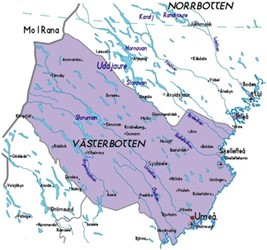
Figure 6: Map with Lycksele and Ume River
In Lycksele, the invading colonizers find an historically established Lapp trading center. From antiquity, it appears, the “Samers” used this “udde” (jetty) along the Ume River for the annual reindeer slaughter and commercial trade ventures. So, the Crown establishes its taxing center in Lycksele, proclaiming all rights to the territory and natural domination of the trading scene. In 1607, they build the first “Samer” Christian church on the commercial jetty of old Lycksele. The tax effort proves as successful as the evangelical. But black marketer Lapps silently boycott the settling Swedes, and some Lapps even swear to fight this invasion of this foreign culture unwilling to accept their ancient Gods. But the nasty winter climate and the addition of hard alcohol in the tradition of the Vikings loosens up the atmosphere of exchange. The rebellious movement fails to attract unifying support. The Christian doctrine promises all its beauty and comfort. The Crown prevails, colonization begins, and “Samers” submit, as they are successfully subdued.
In medieval times, Sweden suffers similar growing pains as the rest of Europe. During and after the renaissance, however, medicine improves, food and nutrition value gains significant respect, and overall, the health standards progress to cause the population growth, leading to unemployed farmers crowding the cities and seeking shelter for subsistence under their Royal rulers.
The economy of this age works on simple handicraft, primarily centering around family labor and the home workshop. This reflects the system of the farm, with the addition of specialization and trade. Collective labor efforts appear with greater frequency with the town economies. In large constructive undertakings like castles, churches, sea-faring ships, and war, certainly the organizers understand how to exploit the power of mass, focused, labor, and capitalizing endeavors. For the normal family, however, the city means a gradual breakdown of the home-handicraft industry. Unquestionably, the case remains the same in Sweden, for centuries, for the majority of families who live off their farming efforts in the country. The individual unit concentrates its efforts to produce its life’s blood. Rural life knows very little of the economic refinements which begin to appear through the city culture.
Gradually, the value of money gains power, as food and housing make cumbersome items of trade. The farther the distance from town, however, the less the people live with money. They live self-sufficiently and independently, ignorant of the dawning revolution of industry throughout Europe. In Sweden, transportation opens the coastline to marine traffic and banking, not to mention engineering and medicine. Inland the rivers run wild, the trails are only manageable by foot.
At this time in early history, a trip from Umeå to Lycksele means a three-to-four-day journey, through wild forest, along a mighty powerful river. Maybe wintertime presents easier traveling opportunities, except for the weather. The invading civilization of colonizers then face a challenging situation to occupy this wilderness of Lappland. In my story, the market in Lycksele opens the first channel, both through taxation, commodities, and religion.
In 1671, the Swedish king Karl XI orders a study of further colonial possibilities along the Ume River above Lycksele. The results show the area capable of supporting some fifty-six families. By 1740, the move to the inland freshwater ways, scattered marshy meadows and growing forest lands, settles families in Luspen, Bastuträsk and Storuman. Soon, the Stensele “socken” area fills with hopeful “nybyggare” settlers.
III. Early Family Settlers in Lappland
Here, finally begins the story of my family, specifically. The traces available through old church books and the crown’s tax records, show four major contributors, among others, in this growing area. One Thomas Erik Norrman from Norrsjö in Skellefteå kommun. Two, Anders Johansson a “bonde” farmer in Mjödvattnet, somewhere between Lycksele and Åsele in the south. Then, on the other side of Lycksele, there’s Jacob Johansson (3) in Degerfors, and Olof Olofsson (4) in Granön.
The first three show the extent of my research, though they must also have their ancestors (see ancestry.com). For the interested, the Härnösand library also has all the church records for Sweden. If I could start there with what I know, I’d look for Anders Johanson from 16651. I checked the old books of Norrman and the Degerfors Johansson, and found the records so faint I don’t believe they can show much from further research. But the last character happens to tie in with Jan Ingemar Stenmark, and the press (Västerbotten Kuriren V-K) traces him back to a Gulle in 1400AD. I didn’t realize our relation when I saw this notice in Tärnaby. And so, for another time, I leave the continuation of back dating.
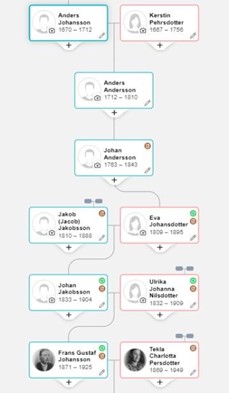
| 1 The MyHeritage site suggests Anders Johansson was born in 1670, not 1665 |
Figure 7: MyHeritage.com detail showing line from Fritz’ father to Anders Johansson
Thomas Erik Norrman’s son, Pehr Thomasson moves to Sandsele, Sorsele. This small village lies on the Sorsele river some sixty kilometers above Stensele. The move takes place around 1750AD. Next in this line comes Abraham Pehrsson who settles a family in Ankarsund, which lies closer to Stensele up the Ume River some forty kilometers. His son, Johan Petter, moves and tries several spots along the river and by the nearby lakes. And his son, Anders August Johansson grows up in Nordanäs very near Umnäs. He learns fishing as a trade and moves north into Norway and up to Narvik as a “lofotenfiskare” fishing the north polar sea during the summer. Quick as a lightning bolt, they say, he earns the nickname “jungen,” meaning a flash in Norwegian, and the name for a purple flowering fern common in the Swedish forest. He meets Johanna Alexandra Isaksdotter, marries her and thus inherits a nice farm in Lönnberg ten kilometers south of Stensele, and birthplace of Lilly Charlotta, my Farmor. The eldest son, August Anders passes this farm on to Henning Ljung who lives there today (1983) and carries the name chosen by the “lofotenfiskare” another Ljung brother to my Farmor Lilly.
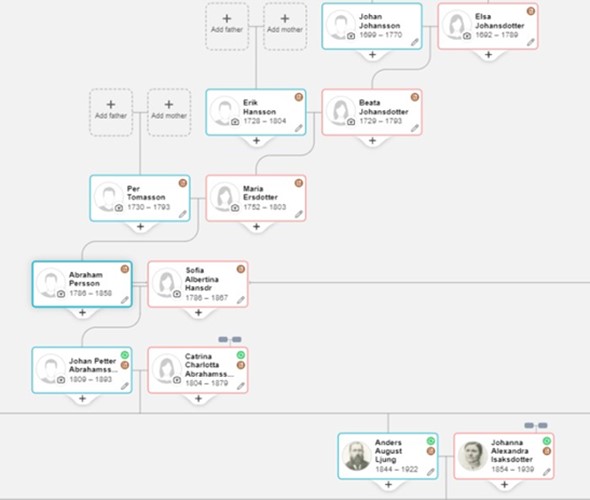
Figure 8: Ancestors of Lilly’s father Anders August Ljung
Johanna Isaksdotter traces back to, among others, Anders Johansson, the farmer from Mjödvattnet, Burträsk born around 1665. His son, Anders Andersson outlives one wife and marries another. He sires a total of fourteen children all of whom outlive childhood, a remarkable feat for these times. His youngest son, Johan Anderson (1763-1843) moves to Långvattnet and starts a huge family of his own, which spreads throughout the Stensele community. All ten of his children start a family in this area. Three of them lead directly to my family. Son, Pehr Johansson (born 1800) marries Eva Stenvall (born 1804) from Stensele. They have a son named Isac Pehrson (1829-1888). He marries his first cousin Sara Sofia Isaksdotter (1829-1873) whose mother Anna Christina Johansdotter (b. 1804) comes from the same Johan Andersson and Maria Mattsdotter in Långvattnet as her brother Pehr Johansson. Sara Sofia and Isak Pehrsson live in Stenstorp, an “udde” along the river Ume above Stensele village. They have three
children before packing up the whole “kit and kapoodle” and they move to Lönnberg. Their eldest and only son Johan (born 1851), all of five or six years old, has charge of his sisters Johanna Alexandra (b. 1854) and Sara Christina Sofia (b. 1856) for the move. Lönnberg is where my history remains today.
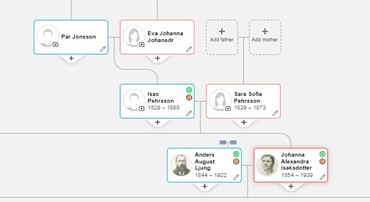
Figure 9: Ancestors of Lilly’s mother
Jacob Johansson or Jonsson (the records prove difficult to read sometimes impossible, destroyed by mildew) he lives in Ekkorsele, Degerfors kommun around 1725. His son Hans Jacobsson (b. 1734 or 1751) moves to Stensele in 1781 with his wife Elisabet Hansdotter also from Ekkorsele. They travel with their son, Jacob Hansson (b. 1778) which makes him only three years old for the journey. (This seems to eliminate the 1734 birthdate of his father also.) The family settles in Björkberg some 60 km distance southeast from Stensele. Jacob marries the widow Catharina Jonsdotter after she has nine children already with Jon Danielsson from Bastuträsk. Jacob buys a piece of land in the area of Skarvsjöby.
Catharina gives him seven children, obviously accepting her gift of fertility. Their youngest child Jacob (b. 1810) has no inheritance to land. But Jacob Jacobsson marries Eva Johansdotter (b. 1808) the youngest and favorite daughter of old Johan Andersson in yes Långvattnet. Later, I describe the circumstances of this land, but Jacob and Eva settle along the shores of the bountiful Skarven lake (Skarvsjöby). Their eldest son, Johan Jacobsson (b.1833), inherits this piece of land. Johan marries Ulrika Johanna Nilsdotter (b. 1832) a second- generation descendant of Jacob Hansson’s sister. They have seven children. The oldest and youngest deal with the family land, the two middle brothers try their luck in America, and the only living daughter marries a man in Arjeplug up north. The other two die while still children. The youngest is Frans-Gustaf (b. 1871) who marries Thekla Charlotta from Bastuträsk, and they have my grandfather farfar Fritz, born before wedlock.
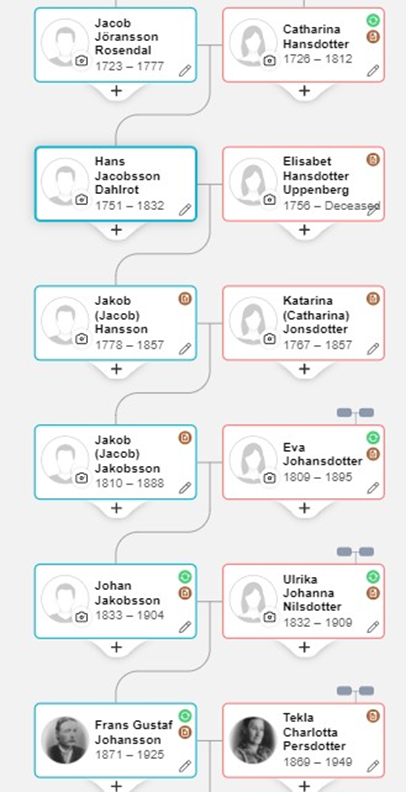
Figure 10: Ancestors of Fritz’ father
Frans and Thekla Charlotta marry shortly thereafter (1894). She descends from a fairly well- known Swedish family tree, named the same as the Stenmark family. Her father, Pehr Christian Sjöberg (b. 1817) lives in Bastuträsk. His father, Pehr Olof Frederiksson lives in Gubbträsk, where his father Frederik Hansson (b. 1793) originally moved the family. Before that, we have a Hans Olofsson to Olof Olofsson from Granön, born around 1700 and traced back to some Gulle
in 1400. Frederik Hansson’s oldest son, Pehr Olof inherits his father’s land, he leads to my family. His brother Frederik (b. 1817) moves to Umfors in Tärna. He intends to move all the way to Norway, but bad weather holds him to the Swedish side of the “fjälls” they say. Here, he takes the name Stenmark. His son Anders Gustaf Stenmark moves to Granön. The next generation Frederik Artur Stenmark moves into the main Tärna village, where his son Erik Gustaf sires Jan Ingemar Stenmark (b. 1956), who brings worldly fame to little Tärnaby, as the home of the renowned all-time greatest ski racer, Ingemar Stenmark, my distant cousin from Lappland.
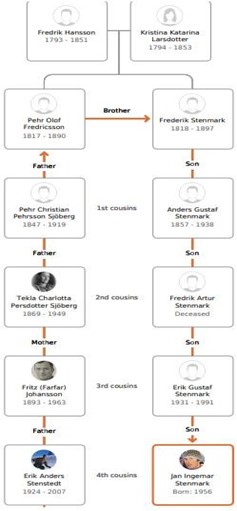
Figure 11: Ingemar Stenmark’s 4th cousin relationship to my father Erik
From Umeå to Tärnaby is some three hundred kilometers along the Ume River. The 17th Century colonial farming expansion moves most of this 300km distance after King Charles, Karl XI orders a colonial study. These farming families must live simple, hard lives. The confluence of a constant battle against the climate and the growing family numbers, combine to force a territorial expansion throughout the area, and ultimately leading to my existence in America of course. When the wandering folks would find compatible soil here, with solar exposure and sufficient water, then they stayed, maybe. If they have ten kids, as seems normal, these youngsters must find their own corner of the forest along a lake or meadow, but often taxing authorities drive them deep into the isolated woods. Only one or two of the children can divide any of the developed property from the passing generations. The majority lose the advantage of previously broken land in the battle to produce enough during the short season to last throughout the long cold one. In these times, if a man fails to register for placement on a piece of land by the age of twenty-two, the Swedish military (serving the King) has rights to call him for national service. These centuries of European wars which precede the days of Swedish neutrality, find good use for the overflow of men from the North. Women seem scarce here, and social meeting opportunities are few and far between, as maybe the two major church weekends Easter and Mikaelehelgen prove. Thus, inter-family marriage occurs often.
Overall, the church dominates all other aspects of life here in the days of Lappland exploration. Food, shelter, and family, remain the highest priorities. But over this, religion transcends, the ancient Christian tradition claims responsibility for man’s fate, efter alt. The omnipotent power of God’s church demands obedience, of course, and regular attendance, as marked in the records, show that penalties can be stiff. For blasphemy or dissolution of faith, the burning stake of medieval days might often appear.
As we know, Renaissance humanism and Baroque style royalty regimes replace the medieval harshness all over Europe. Also, from its center in Stockholm, the united Swedish Lutheran church acts as Agent of the Agent of the Crown. In remote areas of wilderness, like the Ume River lands and Stensele-udde, change arrives slowly. But gradually, taxation agents of the Crown establish their prominence for the settlers, and eventually forest controllers (the Crown “KRON”) dominate the forest industry, stifling any private competition. As the church hierarchy passes regional control to more localized authorities, kommun power establishes its base. And finally, kommunal independence delegates the major community organizing power and communicates directly with the regional capital, and then on to Stockholm. For Stensele kommun, this means Lycksele, the big City in this region, controls the regional power (Capital) while Lappland “landskap” boundaries predominate. When they form Västerbottens ‘län’ (state), Umeå takes over the duties of capital city here for the State and the Royal Crown under a very socialist mindset.
Primarily, old records before the nineteenth century come from 1951 Mormon photocopies of church books. This archival method guarantees public access to most of the ancient religious census books, sustainably, and with room for unlimited study for the interested. Some
examples of the mobility shown by these new builders in Stensele “socken” come from lasting and well-organized taxation books, but also newspaper files as well. An excellent and helpful guide to these records is a book by Osian Egerbladh, Stensele 1741-1960 The Hundred oldest settlers, part X of a series by the same author titled “Ur Lappmarkens bebyggelsehistoria,” published in Umeå, 1972. From this book, I take most of the statistical information for this paper, mostly as to dates and place names. I looked up the microfiche myself in the Lycksele library and found the Hans Jacobsson confusion with birth dates, but the older the records the harder the writing style translates, and the less complete is the information as to place of birth etc. In Umeå, I found the Thomas Erik Norrman from Norsjö stuff and I finish this with his name without a birthdate or previous location.
Continuing with some examples of exchanges and local occurrences, I include some translations of Egerbladh’s books. For example, Hans Jacobsson from Ekkorsele in Degerfors buys one half of the first Luspen settlement in 1779. Erik Johansson and Matts Mattson from Lycksele settle first in Knaften, then Erik moves to Luspen in 1741. Hans Jacobsson brings his wife and young family. Hans Hansson who is either the son of Hans Mattson or the brother of Jacob Hansson, stays in Luspen which encompasses Storuman of today. Jacob Hansson moves on to Björkberg. The Hans Mattson from Uppenberg marries Sofia Olofsdotter from Ekkorsele, and their son Hans Hansson marries Sofia Johansdotter from Lycksele, and their daughter Sophia Hansdotter from Luspen marries Abraham Pehrsson in Ankarsund and the merry go round of family swap continues. More confusion has Elisabet Hansdotter from Hans Mattson, also Ekkorsele, who marries Hans Jacobsson and puts a Dahlrot after his name for distinction.
Hans Jacobsson Dahlrot and his wife Elisabet marry back in Degerfors. Their son Jacob Hansson (1778-1857) moves to Skarven while his parents stay in Björkberg their newly settled home, though the book also says that Hans Dahlrot dies in Luspen 1832. They move around lots clearly. There also appears many Hans Hansson’s Hanssons, and so on. This basic way of shifting name from father to son keeps it simple and confusing. Study the Stensele book for yourself. And inspect the family trees (ancestry.com) to get any sense from this paper. I conclude that Frans-Gustaf Johansson relates to the Anders August Johansson family from their connections in the progression. Some city Swedes say today that everyone in Norrland must relate to each other from one time or another. I felt that Stenmark must be related and was pleased to see the facts.
Jacob Hansson owns a piece of Skarven from 1818-1823. Johan Andersson buys it from an intermediary owner in 1828, and gives it to his daughter Eva, and son in law, Jacob in 1832. Frederik Hansson on Thekla’s and Fritz’s side, buys Gubbträsk property from Olof Pehrsson in 1821. When Frederik Hansson dies in 1851, this piece splits between the three oldest sons. Pehr Olof, the oldest, and an Anders August Frederiksson sell one share and they head for Norway, says the book. Of course, one of them winds up in Umfors, where he chooses the handle Stenmark to confirm that connection.
More in the way of this exchange stuff takes me back to Hans Hansson (born 1759). From Luspen, he moves to Långvattnet in 1789. He leaves this new place and returns to Luspholm shortly thereafter. Samuel Pehrsson from Bastuträsk, comes to Lycksele and takes over the newly broken Långvattnet farm around 1793. Samuel and wife Katarina Hermansdotter from Bastuträsk have ten children here. Katarina Charlotta Samuelsdotter (b. 1804) marries a Johan Petter Abrahamsson (1809-1893) from Ankarsund. His father Abraham Pehrsson (1796-1858)
leaves a long trail of new settlements. Abraham’s father also leaves a long trail of descendants, including, Pehr Thomasson (1730-1793) from the Norrman in Skellefteå and Maria Ersdotter (daughter to Erik Hansson in Stensund) have fourteen children, meaning Papa Pehr uses his virility into his sixties, I guess. Abraham is number nine, and how he meets his wife or where he starts his family, I can only wonder. But of course, Sophia Hansdotter lives in Luspholmen and they migrate all over the area. First, in Vällingby in 1819, then in Björkberg 1821, and they register in Slussfors, Rönnbäck and Ångesdal in 1824, Joby 1833, fjäll 1834, klippen 1841 and Vilasund or Umfors in 1844. Most of these sites are found in the Umnäs area on the Ume River towards Storuman.
If they marry in Luspholmen around 1807, this gives them several years to start their family with the help of the Hans Hansson family. Hans, of course, is the son of the original Luspen settler Hans Mattson from Ekkorsele. Then comes the oldest of the new generation Johan Petter who meets Katarina Samuelsdotter from Långvattnet and they settle in Nordanäs. In 1828, Johan buys half of Ankarsund from his father, then sells it in 1835 to move with his wife and young children upriver. Nordanäs lies one third of a Swedish mile (or 3.3 km.) north of Umnäs. It seems most likely that Abraham helps Johann establish his young family in such familiar territory.
The tax registers lose more credibility than church records from this old period. The safest facts include church attendance, reading ability, communion participation and of course marriage, birth, and death notices. Johann Petter and Katarina Charlotta have eight children, all baptized. The parents both read passably, they know the Lord’s prayer, the first catechism, and two books in the New Testament, so it says in the record. They attend church in Stensele once per year, which even by boat ride, back then, presents the family with a major expedition project, mostly for the men.
North of Stensele, the Ume River flows unaccompanied by a decent road. Not until 1920 does Storuman connect Slussfors with a summer road. Winter roads, however, provide the better communication for a wagon, but sixty kilometers seems a lot to sled or ski for a religious weekend. In the spring maybe, when the light makes time for travel and reasonable weather, Johann Petter probably makes his annual sojourn to Stensele to report on his family, take communion, and buy coffee, sugar, and tobacco if the year affords such luxuries.
Frederik Hansson from Stensele owns one quarter of Umnäs, one quarter of Gratön and half of the fjäll, which he sells to J.P. Abrahamsson, says the record. The whole parcel of three pieces of registered property sells for 335 Rdr. Rgs. (“Riks Dahlers RIKS, mynt”), in a transaction that occurs in 1838. No house exists on the lot, but one little hay storage cottage called a “fäbod” says the record. Samuel Pehrsson, the father-in-law must have helped J.P. with the deal, as the Stensele book claims that old Samuel should have ten rolls of tobacco from his “MAG” (son-in- law) each year. Sam moves back to Luspen where he dies in 1853 at ninety-one years of age.
Johan and Katarina maybe also row down to Luspen, each summer to visit dad, and keep him in tobacco, I guess. While thereby, they also visit the church, baptize another child, and report their taxes. I doubt if they can make this visit more than once per year, or if they can find
enough time away from their cows, but J.P. has “RÅD” (money) maybe, and a “piga” (nanny) and they were all tough, mobile, and hungry for church et al.
Their oldest son, cleverly named Abraham Petter Johansson (b. 1835), stays in Nordanäs with
his brother Johan Johansson (b. 1840). They inherit the right to buy their father’s farm, says the tradition. J.P. and his great quantity of land, reminds me of some Texas spread in America, but for the greater fishing potential here in Lappland, and the probability that most of the marshy meadow land resembles a swamp in best of times, and very little broken farmable land exists.
Not enough to support more than two families anyway I would guess. So, the other children see and seek their subsistence elsewhere. A daughter marries in Dikanäs, not too far away, another moves to Långvattnet, one son to Vilhemina for the army I guess, and two disappear to unknown destinations. This leaves our man Anders August Johansson (b. 1844) who marries into the Isac Pehrsson Lönnberg farm. First, he spends several years fishing above the Norwegian coastal city of Narvik. Nasty cold work this, but Anders August, “Ljungen” as they called him, proves his ability. He earns the lightning flash and flowery nickname, along with some spare money for the long journey home, and then, he moves south again to farming fortune.
At the edge of Stensele an “udde” sticks out into the Ume River, Stentorp. Here Johan Stenvall, the Stensele bellringer (“klockaren”) receives permission to build his family dwelling in 1824. In 1829, he sells half of his land to his son-in-law Pehr Johansson, who in 1838, buys the rest of the lot. And in 1852, Pehr permits his son Isak to build a home there. In 1843, Pehr owns one horse, two cows, and some sheep according to the tax inquest reported by our friend Egerbladh. Isak, the son, marries cousin Sara Sofia in 1852.
Following this, or shortly thereafter, for any number of unknown reasons, Isak, Sara Sofia and their three children pack up their little house and belongings and move the whole pile across the river and another eight kilometers upstream to Lönnberg. The round building-block formation of knot-logged houses of this time, permits their easy dismantling and reassembly, I guess. Isak moves the house in winter, starting small and simple, dragging a pile of logs with the horse, across the frozen river and up the snow-covered little path. In summer, the river couldn’t be crossed with a dry horse or wagon until about 1890, it says, when they built the first wooden bridge over the Ume. Johan Isaksson (b. 1851), the only son to Isak, works hard at only eight years of age with his father to build a brand-new farm on a stony hill without much previous sign of life support potential. The name of the hill comes from Pehr Christian Rad’s wife Great Stina Lönnberg (b. 1807). He was the first “kyrkoherde” (head pastor) in the Stensele church, records say. Stina receives Lönnberg property as “änkeställe” (widow’s place) after Pehr dies. Her daughter marries some Crown’s minister from Uppsala. They leave the Lönnberg farm to a son, Karl Pehrsson. With money from the sales of his Stentorp place, Isak buys a piece of this rock (sten). He probably digs for well water, though a stream runs nearby. He also taps any other local resources available on this rocky hill above the swampy glacial land in Stensele.
The forests grow thicker during the nineteenth century, and this changes the entire look of Lappland’s countryside. Also, it provides an economic opportunity in logging and paper, which brings on civilization from the South and West from Europe, and the money even comes to lonely Stensele and Lönnberg. From 1850, this tide must wait for fifty to a hundred years, and time for the forests to double in size. Isak and Sofia live through much of this time as farmers, for their cows and sheep provide milk and wool. The horse and a burgeoning crop of family in Stensele socken, take their turn, feeding domestic animal producers. They also have hens.
They grow potatoes and barley to mill for flour. The potatoes, they can even mix with anything: bread, pancakes, dairy food, and meat. The barley stalks and husks add food for the animals, and Stensele has a water mill at this time, for flour. They sell cheese, butter, and leather as trade items in Lycksele for a bit of wheat flour or sugar or other luxury extras, representing a small piece of the common life changing and evolution coming for most farmers in the area.
During this early era, transportation presents a great problem. Boats in the summer combine with lots of walking, cutting, and marking trails. They carry all their goods on their backs.
Winter, of course, means homemade skis, sleds and horse drawn wagons. And Church, usually far away, attracts with supreme import, authority, and devotion. Taxation, of course, works through this channel also. In calling for army duty, the Crown or state feeds its ranks, using major church holidays, and information from the church records.
All social life then, also revolves around four major church celebrations. Midsummer is number one, which interrupts the summer rush of work and thus, attracts the smallest numbers.
Attendance at Mikaelhelg, number two, receives the greatest number of youngsters, often finding a new place as “piga” for girls and “dräng” for boys. This also applies for winter help, indoors utilizing “getare” and junior farm hands, dräng, are used for the summer and winter, because all hands help, and they hunker down as a community family. Christmas, number three on the list of major church holidays, means the most, and celebrates usually at home. At Christmas, the family shares its blessings in preparation for (or as part of) the awesome winter. Number four Easter, celebrates spring, the loveliest time of all in Lappland, sun and snow, daytime and nighttime, a respite from work, and the promise of summer’s blessings and hope for a food bearing harvest.
The Pehrson family survive with their small needs and minimal production. Somewhere however, the parents grow very weak through the 1860’s. Sara Sofia dies in 1871. Isak loses sight one year later. Johanna marries Anders August Ljung also in 1872. She takes care of her new husband, brother Johan, sister Sara, and papa Isak who takes another wife. The burden shifts from the old family to her new family as the older generation looks after itself and her “syskon” marry away. Johan marries Anna Maria Olofsdotter from Åskjelle in 1876. Sister Sara stays on to look after Isak and his new, old wife. This still leaves three families with children living in Lönnberg: two in the small house and the Pehrson’s big house and only a few acres of areable land for all. Isak and Johan built the big house which stands today (1983) in 1860.
Johan moves to the little shack they brought from Stentorp. Tough years lie ahead, according to the records. Little Johanna gives birth to her first son Johan August Ljung (b. 1874). Pehr Alfred, the second in line, born 1877, attracts a case of new world fever as a teenager, after the first brutal years of his life to begin a family of emigrants to the new world. Two serious winters follow in a row. Hunger, famine, sickness, and death sweep the Lappland area.
I found a clipping from a 1935 newspaper where an eighty-year-old man describes the hard times. He tells of the year 1877 when the snow from a severely cold winter lay one meter thick on midsummer’s day. They barely have time to lay some potatoes when the ground refreezes in the early fall. Both the barley crop and the potatoes perished, it says. All summer, as long as it lasts, the family prepares for the rough winter ahead. They manage to get some wheat, which they mix up with ground birch bark to make bread. The trick here, demands something to grind the bark fine enough for the body to possibly digest. The nutritional value might seem negligent, but the filling quantity, might satisfy unbearable hunger, I guess. With nothing else to eat, they manage to force the foul-tasting bread down. Also, it says they grind up moss and some leaves with dried berries, which they boil to make a mush or “Väll.” They have no salt, so the fish they catch in summer only sour when they try to save them for the hardest months ahead. They eat all that they save or find, and they barely survive. He continues in the clipping with the winter when the whole family becomes sick. Three sisters die, he and his brother lie unconscious for six weeks. Some woman comes in to feed the animals. She discovers the family one day, just visiting her neighbors, they all lie on the floor and all the sisters lie there dead. She brings more help and puts them all to bed. This neighbor saves their lives, she feeds the animals what little they have, she can give water to the sick, and spare some food from her own farm maybe. Finally, the father recovers enough strength to move about the farm and they survive, four out of seven. One can only marvel at the persistent faith in God and the care of neighbors under such circumstances. The clipping goes on to say that no word of complaint ever breaks the silence. Then, they criticize the young people of 1935, who don’t know hard times. I wonder at this last part since Sweden at the time, faces as serious an economic crisis as the U.S. depression.
Johanna Ljung knows stories from her own family during these hard winters, says Irene. She tells her children some of the horrifying tales but holds the memory to her grave. No one can talk about these years in Lönnberg, very few stories carry on through the new generations.
Oldsters may know the awful taste of bark bread, but it sounds unrealistic even to this 1930’s depressed generation. Food still means survival, even today, weather provides a blessing or a curse. So, they put the responsibility on God to save them or let these explorers perish. Even my father’s morbror Alfred remembers from his San Francisco perch, the foul taste of stinking fish, meager potatoes, and rotten fruit. They relate sternly to our choosey appetites today.
In Lönnberg, they survive this harsh winter of 1877 without great catastrophe. In Skarven, less than eight kilometers away, they feel nothing like this problem, it seems. The farms sheltered behind the cover of the Skarven hills freeze hardly ever. Also, they have the advantage of a long-established family farm and possibly saved some money to buy salt, at least. The fishing always saves places like this and Långvattnet provides a unique type of wealth in fine wilderness fashion. All around, however, isolated families starve and die in famished sickness. As seen, neighbors go out of their way to check with each other and help when possible. They seem to build a strong community when they follow the moral principles of Christian charity. Because of these large families and their growing need for farming space, many move deeper into the woods, far away from the nearest neighbors. Without money to buy land, they simply settle by a small stream in an out of the way corner of nothingness. The cow dies, no potatoes, papa lies sick, and they can only pray to God for mercy.
The natural growth of the forest barely supports the wild animals over the summer. Then, winter freezes a deadly hush into nature, when lakes everywhere provide endurance for fish, but to fish, demands equipment and energy, especially in mid-winter. A family can survive on stored fruits (mostly berries) and potatoes (maybe some carrots?). But meat, milk, and bread supplementing the others, provide real health and sustainable power to prosper. Here, hunger drives the weak away and forces the best from the strong to get yield from this harsh climate. It forces the serious to fight harder, one could say. But some flee as far as America, where they can meet up with the same conditions. But usually, so the story goes, America creates a paradise for the lucky. Like the fortunate who find a sturdy settlement along the Skarven.
The hills, meadows, and lakes of Skarvsjöby seems a bit of paradise for these early times. Many families can live off this prosperous community, and they mark their place in Stensele history. The farm in question obtains stable continuation from the time of Jacob Jacobsson and Eva Johansdotter in the late 19th century. One quick note from the records first, on her father and mother when they move to Långvattnet, around 1790. Johan and Maria Katarina leave Hjuken, Degerfors the home of her parents right near Johan’s family the Anders Andersson of Mjödvattnet, Burträsk. Johan leaves a huge family of fifteen excluding himself, Maria has five sisters. They take to the river roads towards Stensele, it says, with three young children. Mama carries the youngest and the other two manage to walk beside the cow. First, they plan to settle along the Näsvattnet, but then it appears someone already has taken the choice spot. At Långvattnet, they live under a tree for the summer, then Johan manages to raise some kind of shelter for his family and the cow. They prosper along this lengthy lake shore beside a decent cliff. Only two of their sons stay in Långvattnet, the rest establish families nearby, including Pehr Johansson in Stentorp and Anna Christina in Luspholmen who create the parents of Johanna Alexandra Ljung. The youngest daughter Eva brings me back to Skarven and the Jacob Hansson line.
Hans Jacobsson and Elisabet Hansdotter Dahlrot come to Storuman in 1781, they move on to Björkberg and eventually back to Luspen, where Hans dies in 1832. They have at least three children along the way. Frederik Hansson lives in Bastuträsk. He gives his brother the piece of Skarven land in question in 1818. This brother, Jacob Hansson from Björkberg, marries Katarina Jonsdotter (1767-1861) the widow of Jon Danielsson (1752-1800) from Umeå. The marriage happens early in this first decade of the new century. Jacob Hansson inherits the responsibility for Jon’s children. These nine given, Jacob and Katarina have seven more of their own, making the largest family yet seen in Stensele. The oldest son Daniel Jonsson inherits Jacob’s land in 1821, I think, he merely buys a piece of this land, cheap – fifty riksdahlers. Daniel lets brother Carl Jonsson take over the land since he himself likes Bastuträsk. In 1823, Carl receives permission from the land council in Lycksele to divide the property. He sells half of this to his half-brother Hans Jacobsson (b. 1804) the oldest son of Jacob and Katarina, again savoring a good deal. Johan Andersson, our friend in Långvattnet, buys the other half for Eva his beloved baby daughter. Jacob Hansson still holds his piece here in Skarvsjöby. He must help his oldest son with a loan, for Hans Jacobsson takes care of his father for life under obligation of the standard contract of the time, where parents deal generously with their children only for due receipt in return to avoid neglect in old age. This precedes any state pension program.
The records say Jacob and Eva must keep old Johan supplied with his favorite cheese and a new pair of woolies each year. Usually, the children own a tenth of the property so the parents can recall their share any time everyone is alive. This also prevents early sale and avoids any abandonment of the oldsters. But we know, youth has a mind of its own and flees freely, even in Victorian Skarven.
Jacob Jacobsson settles seriously into the Skarven community, while Johan Jacobsson (1833- 1904), his oldest son, inherits the land given to Eva. One of his brothers Jacob Jacobsson (1836- 1896) marries a sister to Sara Sofia Isaksdotter from Luspholmen. This line also stays in Skarvsjöby, Johan Jacob Jacobsson (1856-?) adds another generation to this name game. Another brother Abraham Petter Jacobsson (b. 1836) marries a Stensele girl of no relation and has nine children to add to this blooming lake community, as I learned.
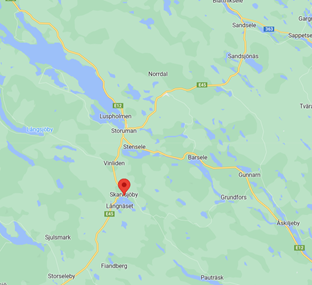
Figure 12: Skarvsjöby and Stensele
Skarvsjöby lies twenty kilometers south of Stensele. Away from the Ume River, a small stream leaves the lake and runs down the Skarven hill and into the big stream “Storbäcken” which connects ten plus winding kilometers later with the Ume across from Stensele church. The hill provides dry soil, good drainage, grassy meadows and as easily reemphasized, milder winters. The water means fish and game all the year round. Also, there’s swimming (bathing I should say), boating, skiing, and snowmobile paradise over the frozen pond. Woe.
Johan Jacobsson marries Ulrika Johanna Nilsdotter a granddaughter of Hans Jacobsson Dahlrot, from Björkberg. Her mother, Ulrika Louisa Hansdotter, adds a sister to the Jacob and Frederik Hanssons’ line. In this line, Ulrika Johanna marries her cousin’s son. In order to skip this generation, I note that Jacob Hansson (b. 1778) is seventeen years older than his sister Ulrika Louisa (1795-1872). Unfortunately, no clear account of the Hans Jacobsson (1751-1832) family exists, to my findings anyway. The names seem so very common, and get confusing with other Hans Hansson’s Hanssons etc. They float through the old church records, and I found one Hans Jacobsson family with a Jacob and a Hans for sons, but the birthdates didn’t match. This family from and around Stensele on the Ume River moves frequently and leaves only a faint trace of their exchanges and fainter signs of their relations and background.
IV. Farfar’s parents – Thekla Charlotta and Frans Gustaf
This brings me to the birth of Frans Gustaf Johansson born 1871 in Skarvsjöby, the youngest of Johan and Ulrika’s children. Thekla Charlotta comes into the picture from Bastuträsk, a small village downstream from Stensele, now joined with the town of Gunnarn. A picture of her parents hangs on the wall in Skarvsjöby today alongside an even older picture of the brother to the forefather of the famous Ingemar Stenmark, Pehr Olof Frederiksson (b. 1817). Pehr Olof sports a long beard in the picture, and his wife has a heavy looking gray suit. Pehr Christian Sjöberg (b. 1847), the son, contrasts with his father, sporting short slick hair and a darker suit. The styles change even then, as the portrait pictures show. In this picture, they all four look extremely stern, and unaccustomed to the camera. What can they think of the world, which now looks back on their leavings and doings? Even in black and white, the eyes show similar family resemblances, maybe.

Figure 13: Tekla Charlotta’s parents and grandparents
Frans Gustaf Johansson (1871-1925) inherits half of father’s land. His oldest brother Johan Johansson (b. 1857) starts his own clan also along this resourceful Skarven lake. A brother and a sister die in childhood. The other two brothers move to America. Suddenly, this place name appears as destination and demarcation. Instead of a military career or the basic continuation of tradition, the boys also seek new work elsewhere, but with Skarven roots. Industry and revolution capture the history of Europe. The modern world takes its new shape. And science even comes to Lappland.
Two buildings still stand in use on the farm in Skarvsjöby today in 1983. They speak much of the environment, and the local history. With very few tools and only his sons to help with the labor, Jacob Hansson builds the first place before the nineteenth century. This brings up transportation problems since the lakeshore provides only ground, rocks, trees, and access to water, everything else they must bring in on their backs or drag behind a cow. To start building a house while the summer lasts and so much work in breaking the ground for a first crop, the temporary shelter makes for a cold first winter. Maybe a slightly bigger place the second year, like a fäbod but tight and with a crude oven or smokey stove. This means some crowded times for a young family, and probably, as is tradition, the animals sleep inside the warm house in winter, so as not to freeze. Any metal or glass, all the iron tools and cooking gear that cannot be made from stone or wood, comes from Stensele, and there, from the markets in Lycksele.
Somehow, Jacob manages to raise a substantial structure on his land near the water. He has a forge, for the hinges, which still today look homemade. The construction process seems interesting.
Jacob Jacobsson winds up with the house and therefore, maybe he builds it himself, meaning construction date is probably after 1832. It seems the whole building comes from the same time, but maybe Jacob Hansson or someone else even laid the foundation and the living half dates back to 1790. Regardless of who, or when, they play with stones already there, and move others into even flat rows with supplements of dirt and moss, using movable rocks to landscape. This operation takes practice and care to avoid shifting dirt from spring run-off.
They succeed, and the house lasts nearly two centuries. Even horizontal lines can change with the timber they place at each level. Esthetically, they use even logs, and this precision shows all the way up, with a few wedge additions to compensate for different sized boards (hewn logs). Flat stones and evenly shaped logs hold a strong wall and thereby the shelter holds a strong roof. The axe hewn logs shine even without precise edging but beveling and notching with the axe make for a tight fit. Wood plugs and moss insulation blend into the beefy lumber. They treat the final product with sap for protection, in the old days. Today, the Swedish red paint blends the old timber with the new to color the landscape of red farmhouses. They use massive logs which run the length of the walls for the roof. These hang on a beveled notch to fit at each end, then they hang smaller shoulder tresses along this length which hold the first layer of thinner roof planks. In these old days, a layer of “NÄVER” (birch bark) covers and then mixes with other handmade shingles for a tight and insulated roof.
Of course, they make everything possible with the available tools right there, on the spot. But the windows come from town, so they find special place for these luxuries. The doors take days of layering, using the finest thinnest boards they can cut. They pattern the doors to match the window or shutters. Later, they might install a lock from town. The hinges are a simple design with a hook on the doorjamb, and a folded piece attached to the door which hangs quite effectively. Jacob’s forge also makes some iron nails to reinforce in places, like the hinges. Also, with the forge they make handles, horseshoes, and plows or spades. Imagine the work to cut and sharpen these tools with a stone. Imagine the time for two or three men to build this house, a monument for its day, in the short season of summer. Massive timbers for strength and winter tightness by being creative, suffice for the exterior décor, but inside they have time during the long winter months to smooth out the walls and tighten the roof. They learn to build furniture, of course, and eating bowls, as well as barrels for water, a loom to make their own clothes and maybe even picture frames, and carvings for the talented.
The oven might include homemade bricks, a type of cement and some pieces of metal for fire protection and cooking. The kitchen takes half of the house, with sleeping places along the walls and a large table for eating. The fire in the stove is the center, for food and heat. The other half of this house is the barn. During the coldest months of the winter the animals were well acquainted to sleeping with the family, or the other way around. This seems most possible in a smaller fäbod type arrangement, where the animals might have their own fäbod, without heat, forcing them into the family shack in the coldest times. (Food producers need and deserve shelter from this climate, of course.) To picture three generations of humans, ten people or more, sleeping along the walls, with a cow and the sheep sleeping in the middle of the floor while some hens might take to the loft with the cat, this stretches the imagination. I like the idea of lofts for sleeping in the smoky warmth, while the cows and the swine can have the floor. Jacob’s place in Skarven innovates with ventilation I suppose and hope, of course. Mama and Papa deserve their own room, and the animals have the whole other half of the house – this is a castle. They shuttle the heat easily through holes in the top of the wall, and they could use a little fan for help. Eventually, the family builds another small house alongside, for the older generation, and then another big house for the Frans Gustaf family. For progress. Progress progresses, I guess. In Skarvsjöby, progress may lack prosperity, and loses on the scale of modernity, but the family grows strong with the community.
It takes another century for the home craft industry and independence from town to fully disappear. Roads, money, and civilization invade with all the lure of modern industrialized comforts, and all the problems, but community takes over. Large families, poor soil, and harsh climate, however, drive so many away from Lappland. First, the boys move to the city for army duty, obligatory for every twenty-year-old since 1890. Before this, they call them in if they have not settled themselves on a farm by age twenty.
From the cities, they find that unemployment comes when factories, and wealthy entitled nobles, play their power games to keep labor prices low. Then, they dream of moving to America, where they say the industrialist capitalist always needs bodies, and farmers might even chance striking gold. Once a family sends one son abroad and hears of the successful ventures in an easier climate, with plentiful work, frontiers opening and money potentially for all, with so many things to buy, the fever spreads fast. The transition to machinery and to the city coincides with the movement to America, then the modern system of ever-growing economies, and the acceleration takes over. I can’t help but look back on the history, and older ways of the home-crafts economy, and see something lost to our rushing, rootless and accelerated souls. Satisfaction without physical labor it seems, makes for a different sense of pain, life, and God, maybe.
Some hundred years after the foundation of the first house, Johan Jacobsson and his sons build another house right next to the first one in Skarvsjöby. The oldest son here, Johan Johansson (b. 1856) takes his half of the inherited land value somewhere else. The youngest son, Frans Gustaf (1871-1925), takes both houses and a smaller amount of land. Before Thekla Charlotta arrives to take charge of the new generation, the two other brothers set out for America. I assume they, in turn reject a paternal offer to stay, but they decide instead on venturing forward with the adventurous journey for new parts, across the world. Nils Reinhold (b. 1858) moves to Stockholm sometimes instead of military service. Then he follows brother Carl Aron (b. 1868) to Minnesota. This leaves Frans G. with freedom of space to build a family in the new house. Johan and Ulrika live in the old place into the twentieth century.

Figure 14: the church in Stensele
Thekla Charlotta Sjöberg comes to church in Stensele, as far from her Bastuträsk as Skarvsjöby is to Stensele. In the region, 1885 dates the finish of the kommunal project to construct the massive Stensele church. The standard chapel design makes room for all two thousand distant members of the congregation, with a second level for benches, halfway up the ten-meter walls. The steeple reaches over thirty-five meters in Stensele – the tallest and largest wooden church in the whole country of Sweden, north of Gävle. This means pronouncing a communal hub, as the mighty bell-tower calls to the distanced, growing, and pious congregation. Each family donates twenty man-hours labor plus all the timber they can afford to build this communal project. They use a new hydro- water powered saw for the smooth wall finish boards. The main posts measure over sixty centimeters width. Still today, the Stensele church ranks second only to the Margareta church in Lycksele for authority in southern Lappland. But for its size and its universal congregational support in these old days, the Stensele church still stands tallest over the Ume River area.
Thekla Charlotta Sjöberg and Frans Gustaf Johansson meet at one of these festive and holy, church inaugural weekends. She moves to Skarvsjöby as paid help or “piga” since sister Eva moved to Arjeplug. And the Jacobssons might need some “getare” help with their cows. This ancient culture accepts the young courtship, and even the practice of the suitor climbing into the chosen window to sleep together amorously. But, the one convention, which holds strong, says the boy must sleep on top of the bed covers. Frans, however, breaks this rule somehow, and crawls alongside his mate. Therefore, my FarFar Fritz enters this world without the sanctity of Christian wedlock, and according to the church and its code, which also controls state and Crown law, Fritz cannot inherit the “fastighet” (parental estate). Regardless, Frans and Thekla marry in time for their next son Robert (b. 1895) – legitimate by law. They continue and raise a typically huge family (lots of boys). The times remain difficult, however, with heavy winters recorded before the turn of the century. One old neighbour remembers Thekla Charlotta as the type who takes in small, hungry children on their way to school or work, for some milk and bread. Again, these children can live in the comfort of the well-established family on its farm, and the luxury of many cows, where food exists, and Thekla C. generously extends her small gift for the community.
The resourceful Skarven farm raises another huge family. First, three boys before the new century: Fritz (1893), Robert (1895), Aron (1898); and Gustaf (1903), Knut (1906), Sören (1907- 20), and Tora (1909-09) the only girl dies at six months, and Teodor (1911-65). One must assign a “piga” to help Thekla with this heap, because it seems physically impossible for one mother to attend cows and so many children single handedly. Ulrika Johanna, grandma, helps as long as she’s able, until she dies in 1909. After this, the older boys probably work with their mother in the dairy, as well as alongside their father in the field. Knut born in 1906 still lives along the Skarven in 1983 and tells me they never had a “piga.”

Maybe he doesn’t know or remember.
He does remember the amount of work assigned to his mother because men should not work in the kitchen or in the dairy. In reality, the woman works just as hard as the man, if not harder, in this culture. But each sex has their traditional duties with a clear dividing line in between. Man tends to construction and agriculture; he cuts and splits wood for the winter. He cares and feeds the horse. Woman cleans the house, fixes all the food, washes all the dishes and the clothes. She also has charge of feeding and
milking the cows. This last part stretches the line between the agricultural side of work and the housework. Knut says, the boys might help feed the beasts but never milk, and fortunately they only have two or three cows. He stresses the separation, an historic distinction. Also, in winter, mother makes clothes while father builds furniture. Children bring in wood, tend the fire, and keep the water bucket always full. Maybe I could say, the Skarven boys club bends to feminine rule. But who has control?
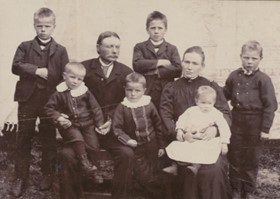
Figure 16: Frans Gustaf and Tekla Charlotta with their six oldest boys (early 1900s)
Thekla teaches the boys to work for her, as Frans guides them in the pursuit of the traditional man’s role. Fritz learns to cook some “mean” pancakes, they say. Knut remembers the young boys in dish washing line, assembly fashion. This maybe reveals a step from the traditional Victorian past century or mere expedience. I see a picture on the wall in Skarvsjöby of Thekla Charlotta, standing beside a young Robert and their horse. She looks as wide as a horse, but very short. And she shrinks to a slight figure in old age.
When the demands of the times press on her power, Thekla Charlotta steps to the modern beat of emancipation. Fritz maybe learns the most from her ways, and he steps into the town life with an educated working girl – Lilly. All the others, except Fritz and Gusfaf, wind-up in Skarvsjöby, with cows, a little plot of land and a wife in the kitchen, and tending the cows, of course.
Cows feed and milk every single day, or they lose their ability to produce. For Thekla Charlotta, as the farmer’s wife, she lives bound to her cows like no other of life’s obligations. Without a daughter or “piga” to alleviate the daily care of cows, these ladies have no chance to attend church either. But Thekla finally goes to church in her old age, as a grandmother she has the luxury of the modern world with a car, and a good road. Ulrika Johanna, the grandma, not the counterpart of Thekla Charlotta in Lönnberg, she never sees this road, but she helps Thekla and Frans survive the first years of family. Who tends the milking and the food when mother lies in childbirth, and grandmother seems ready to die? Who cares for the sick baby Tora while she lives? Knut doesn’t know. The neighbor mothers and young girls probably, or the Johanssons have many relatives and friends close by with their share of able girls, maybe even connecting the families from Lönnberg. And Thekla continually refines her power with help from the female community, making the connection through Stensele and the Church.
Life begins and ends with the Church, of course. Even without a chance to attend any of the four major holiday celebrations, or take formal communion, Sunday means a holy day of rest, sort of. Holy for all Christians, but rest only for the men to enjoy. Mother works a full day and overtime on Sunday, as tradition holds. The cows demand their normal care, and the family needs food, of course. The boys and the father rest around the kitchen all day. Time to eat, relaxing time to enjoy, and the church forbids any work that strays from absolute obligation or fun, working ladies excluded. Play, for the kids, and older boys, they make up games themselves. Along with hobbies, and rest, they build heartier appetites than the normal work sometimes on Sundays. With ten manly mouths to feed, this guarantees a big day for the chief chef Tekla Charlotta. She grows strong out of her family’s necessity and draws all the resources of a bountiful farm to raise a family during the last and hardest years of a dying way of life, the turn of a Century.
By the time Robert and wife Hulda have their first son Rolf (b. 1929), Skarven enters the big world. They connect Vilhemina with Stensele first by road then the railroad makes the mighty entrance, along with so many wars all around Europe. They also build their own hydroelectric plant for the Stensele kommun, on the little stream running down the Skarven hill. Frans Gustaf dies in 1925 from a heart attack. Thekla Charlotta must then enjoy her years in retirement, when she has the old, old house all to herself. She enjoys the Sunday ride into church, they say. But hard work runs through her Victorian blood, it keeps her life in the past, and she watches the new world change. With machines to work, who needs tradition? At one time, she operated a telephone switchboard for the community.
Each summer, the horse runs free so as not to destroy the haystacks or eat all the nearby grass. The cows also must move away from the home. For the Skarven crew this means moving an entire operation out to the meadows above Bergsäter. Here, they keep a fäbod on the hill on the way to Paluträsk. This provides their place to store hay until the first snow when they bring the horse and sled to retrieve and keep the cows in the barn for the winter. The children take charge of the roaming cows in summer, leading them back to the fäbod each evening for
milking. They call these young charges “getare.” As reward for their summer service, these “getare” go to church over Mikaelehelgen. The weekend of Mikalhelg in October is when the
church fills with Stensele’s youth seeking a new situation or simply meeting their friends.
For Thekla Charlotta’s daily affairs, she comes to the fäbod at Bergsäter to milk her cows each day in summer. First, she must row over the Skarven lake, from their house on the northern to the opposite end, at least three kilometers. Then she walks along a forest path three kilometers, to a small pond. She rows the next boat over the pond, then she finishes the journey up the Bergsäter meadow. Here, the fäbod lies in the middle of the long meadow. The sloping southern exposure provides an ideal growing area for tall grass. The men come to cut this grass and store it in the fäbod, so the “getare” must keep the cows away from the easy feed, bringing them back to the fäbod shelter each night. As long as the boys work along here with their father, nearly the whole family lives in Bergsäter. But Thekla still travels back and forth each day. She milks in the evening, spends the night, and milks again in the morning.
Returning home then, she stores the milk in the barn, tends her cheese and butter, and fixes food to take back to the family at work. When just the children live out at Bergsäter, she has meals to fix for Frans and his older boys. She manages all this with a minimum of help, of course. To me, as a born delegator, I believe that infant children demand enough constant care to warrant a “piga” even though grandma Ulrika is probably available, at least while she remains in good health. But who cleans the house, or washes the clothes? Obviously, when the boys learn to put on their own trousers, they relieve Tekla of work, and learn to help her even if the work is not manly. And soon, their father will need more of their help on his side of the operation. In the end, there is no rest for these farmers, settlers and wandering Swedes.
To me, there lives something wonderful in this daily routine and yearly evolution, which doesn’t trouble or shame. The sweat sticks to the dirt, the mosquitoes drone, and the calloused hands mark their owners as belonging to the rugged outdoor complexion. To these folk, the work means life itself. It gives a satisfying sleep even while the sun never really disappears for long, and the day’s grind demands a healthy rest. Complaints appear practically non-existent, they say. Pain or sickness and death present the only hardships or sorrow. And for this, they rely on the Lord’s traditional protection, manifested in the Church. These farmer Lapps never look for the midnight sun except maybe at midsummer when they stop for a weekend and celebrate God’s bounty. And when they dream….
They live apart from another world where industry booms. Jobs in factories and money to buy toys, seem strange ways of living, foreign to this basic pattern, life’s repetition. Here, life moves around the seasons naturally. The family takes its needed energy from the Earth, air, water, and sun. When talking to me about the twentieth century, these folk seem to say the future perspective remains shadowed by the tradition of centuries. Looking back for them, reveals a life progressing very slowly. This tranquility maybe tries to shelter life around a family, bonded with nature. But we continually progress, regardless, accumulating greater comforts. But for the people of Stensele at this time, the Earth still provided life’s blood and home. But as we know, more efficient organization and modernized tools give manpower and progress progresses. The brain grows stronger with the added comforts, of course, and man learns to control his home and extend his destiny, but, one might argue, he forfeits his home in nature.
Population grows all around the world over time, exploration searches farther, and with progress, the world shrinks. Society interrupts the peaceful existence of life in northern Sweden, as these settlers succeed to conquer the wilds of the Ume River and the forests of Lappland. Now, in the 20th Century, they need real income to pay taxes and give the Crown due reward for helping pay for their settlement years. Originally, the Crown awarded twenty or more tax free years for those homesteading in these certain areas. But taxes climb high for the dawn of 1900. In Lappland, this helps fuel the hopes for America. For those who stay in Lappland for the new Century, a rush comes when the State acts, now replacing the Crown, using an old Crown edict calling for a million trees to fall and transport down the Ume to Umeå.
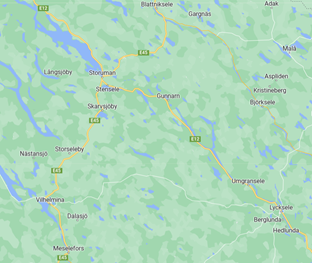
Figure 17: roads around Stensele and Lycksele
Records show that by 1887, the kommun finished breaking the road from Lycksele to Stensele, which extends communication and brings goods to the up-river area that couldn’t previously be transported by hand or during the winter by sled. Suddenly, a post office opens its doors in Stensele and the natural and international drive for timber pumps hard into the local economy. By 1912, over two million trees per year travel the distance to Umeå.
Road work into the wilds of Lappland also pursues this attack of modernity. In 1910, they break the road along the Storuman to Luspen. Also, in the Stensele kommun, they open a bridge over the mighty Ume, and a road to Vinliden, halfway to Skarvsjöby, and excellent access to Lönnberg. It takes until 1920 for the bridge to cross the Storbäcken and break the road up the Skarven hill. Then, the railroad industry explodes on the scene, and I could carry on with this progression until the situation of today. Instead, I wish to bring in more of the wandering crowd from the Lönnberg story and complete the Stenstedt family tree.
V. Farmor’s second oldest brother, Alfred Berglof (Ljung), leaves Lappland for America in 1896
As the timber drive shoots a burst into the local economy, Farmor Lilly’s older brother Alfred (born 1877) heads for America. He has some friend in Minnesota who helps him make the step. Springtime 1896, Al Ljung packs the little he can carry on his back, and says farewell to his mother, father, four brothers and three sisters. His mother Johanna, 42, not quite pregnant with Irene, sorrows to see her son leave his home, no doubt. After all, however, this leaves one less mouth to feed. The father, Anders August, 52, probably understands that life’s opportunities lie farther away for his second oldest son, as compared to when he traveled up to Narvik to fish, and he knows that American travelers might never return. The brothers of Alfred maybe envy the chance to see the world or not. At this time, the older brother August, 22, starts working in the forest cutting wood for next winter. He knows the responsibility of inheriting the farm belongs only to him. This leaves Victor, Jenny and Ester, all teenagers who think more about their own situation, and probably, they also see how this frees another bed space. Erhard and Hugo, on the younger side, barely know more than two-year-old little Lilly.

The nineteen-year-old Alfred, Lappland adventurer, puts on his skis (homemade of course), and sets out for the town of Stensele. From there, he must follow beside the still frozen Ume River up and over the fjälls I imagine. In Tärna, he probably rests for a day, and waits out another storm, maybe. Up and over the rugged mountain border with Norway, he goes on skis, following down into the Mo river valley, to the end of the fjord and the Norwegian coast. In the port town of Mo I Rana, he can sell the skis and poles, and he earns twenty-five öre, which helps him buy the boat passage ticket to Newcastle, England or Edinburgh, Scotland. He crosses to England from Edinburgh and, in my mind, catches a train to take the major ocean cruise line from Liverpool to New York, New York. Here, he finds the Statue of Liberty, no Brooklyn Bridge yet, and just a little of the famous skyline – imagine. Without ever seeing a town bigger than Stensele from his own country, and passing through England fast, New York in 1896 must penetrate deep into this innocent, young traveler – a born Lappland farmer.
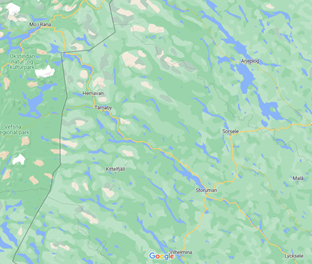
Figure 19: the route to Mo I Rana
Here in America, awaits the land of dreamers, the extension of Europe’s ideals and a transplant of its ancient Roman/Greek culture, which fills the heart of seekers and dreamers like Al. The land of frontiers, open for settlement, promise the big chance to climb out of the farmer’s world, out of the frozen cesspool of Lappland to lavish in the cream of America, as it might claim on the poster ad in Liverpool. And certainly, this provides a form of relief for the oppressed, and a job for the poor and hungry, and vast open space for the farmer to grow rich like the city folk. The principle of freedom maybe fights with the chaotic expansion and the State now struggles to control things, independent of the Crown. Like we struggle still today to control the chaos that comes with such freedoms, and of course the unprecedented, and almost inexplicable riches that come with strikingly similar injustices to that which drives the new world settlers from Europe. The land of competition it is, however, and opportunity, imperialism and slavery, baseball, and the Ford Motor Company with innovations on the assembly line, prosper in the process of progress, but poverty is still seen on every street corner in the big cities. Here, I would argue, idealism faces the inevitable hypocrisy and contradictions of man’s miserable fate. The dream turns to progress and prosperity, however, and finally, the world fills, taking us to modernity, it is discovered. But the free spirit struggles for its uniqueness still, which keeps it strong, and the immigrants reach the precipice of their expanded potential. But, for Alfred, he faces just the beginning of his journey. He lives far into the new 20th century of explosive development in the name of progress, which carries these United States to unmatched world power and influence. And even today, the controversy rekindles as the world catches up, and the U.S. loses face like a mixed-up adolescent with a blown ego, and history overpowers the reigns of youth and modernity. Maybe?
Al continues from New York to Minnesota, as planned. But he reaches his original destination disappointed at the similar look of home. His friend helped him buy the ticket to come over, so Al goes to work farming again. Minnesota may have different trees and better soil, as compared to Lappland, but the smell of the barn and the demands of the exhausting work keep Al dreaming about New York and what he hears of the west coast. Winter sets in just like back home, which gives young Alfred time to study the language. He learns to read the little newspaper they print locally for the farmers. But the tales they relate of hardship in this area sound awfully similar to the problems facing the Swedish settlers in Lappland. Here, maybe the land reaps a glorious harvest if one survives the nasty winter, and his friend’s farm looks well established. So, he might ask, why leave Lappland to start the game his parents play. The years of investment to make a farm just like his brother inherits, sours the appeal of the new situation for Alfred. He yearns to send letters home filled with the excitement of a place like New York, probably, although the signs of failure litter those sidewalks. But opportunity lies out west, they say, and the young Swedish immigrant wants in on the dream.
At any time, California carries an allure, which travels fast and especially potently in those times, to strike deep into the heart of the winter climate settlers. So, Al works the spring in Minnesota and pays off his loan, but he has to borrow a little more to complete the journey all the way to San Francisco, and his family of Minnesotans believe in the good fortune that comes from the west. His friend envies the chance to move on, it seems. With a growing farm and family, the spirit for adventure settles to nostalgia for his friend, and Al rides the train alone, first to Chicago.
In Chicago, Al sees another industrial metropolis nearly frightening him with its sheer size. He stays one night in a cheap hostel for train travelers, and he tells of meeting some of the strangest people that a world could collect in one place. Al’s English language skills at this time likely show his winter’s discipline from the old Lappland winter nights. But these strange strangers tell stories of the gold rush and ghost towns in Nevada, and by the look of these old prospectors, to Al, it seems hard to believe their tales of riches, now merely memories and so susceptible to embellishment.
In this new country, the men look for work, the women come from afar to join their husbands, and they talk of unemployment and food lines, as easily as gunfights and funny eyed Asians from across the Pacific Ocean, I would imagine. The train leaves the next day at noon to continue with Al’s journey. In Chicago, Al feels alone and too far away from home. He fights the hesitation and shyness, as he tells in his letters back home, read and reread by family and friends. At the newsstand, they say, he buys a fashion paper and reads stories of the rich life in Paris, London, New York, Chicago, and San Francisco. And on the train west, he tries to talk with a nice-looking young man in a suit. This man is a Mormon and tries to convert Al to his religion. And while Al agrees with some of the principles, he feels satisfied with the standard faith of the family back home. The Mormon gets off in Salt Lake City, halfway through the Rocky Mountains, after Denver, which looked so rough, and Nevada was desolate as Utah. But then, the Sierra Nevada Mountain range plunges into view with more spectacular scenery and Donner Lake pops up in California, where the train chugs along a cliff overlooking the lake and Carson valley below. The summit of the Sierra Nevada Range comes next, then the Sacramento Valley. If he travels in summertime, he might wonder why one needs heat like this overwhelming one. But in 1897, California welcomed the distant traveler, who probably wants to throw off all his wool clothes and live like a native on the beach. The train stops in Oakland, where anyone could smell the ocean in those days. So, Al takes the ferry boat to San Francisco, and he books into another cheap hotel, but this time, the atmosphere tells a new story.
Hotel Eureka in San Francisco introduces Alfred to the cultural wastebasket of California. They come here literally from all corners of the world. The letters tell of one from Lithuania, two blokes from Ireland, a Mexican, and two newcomers from China who spoke no English. Al represents the northerner, but it doesn’t really matter, because foreign is foreign.
They all look for work in the city by the bay. With only fifty years of civilized history to its name, San Francisco at this time, means the end of the wild west and the beginning of something new. It seems like the culture of Greece moved west to meet the east. The simple tradition of growing up in Lappland, probably looks on Italian and Chinaman with equal confusion and attraction. But even today, cultures still try to purify their transplanted lives, and in those times, the city clearly separated into districts. Many Poles, Irish and Swedes work at the longshoremen’s dock yards, and so they adhere to the mission district, a jumble of working-class folk in the day. Chinatown maintains an obvious cohesion, and tourist attraction still today. In the old days, Italians owned some fine restaurants by the wharves on north beach. Market street means the financial center, even back then. Much earlier, Union Square held the first demonstration against slavery and the confederates – hence the name. And even then, there was high society from Nob Hill to the Palace Hotel and the St. Francis, with plush luxury of wealth and snobby culture. They call the city “Baghdad by the bay” even today.
Alfred settles quickly into this international atmosphere. He finds work with a French tailor and learns an excellent trade of which he found interest through his travels, observing apparel – a business literally suited to meet the stylish types of the city. He picks up on the growing demand for tailor services, and when he feels secure at cutting and fitting and sewing, of course, he takes out a loan to open his own little shop. He even takes an insurance policy on the new business. And it barely gets underway when in 1906, the famous earthquake and fire levels everything in the city of San Francisco by the bay.
Al lives in an apartment above the shop at the time, and he tells of running back into his bedroom for his camera, and he forgets his new shoes. He remembers a warning on this type of thing, where the whole floor and walls start rocking, and it continues. Then, it stops, and he wonders should he run back inside, maybe try to save his sewing machine. But another boom hits and the quake starts again. This time, it’s a hard long blast, the building loses its structure and collapses. This happens all around; the streets fill with madness. Like the earth shaking its unsettled rocks to mix its nonconformist proud materialists back to nature, and in 1906 the fire burns everything. Panic pumps adrenalin and Al tries to help some woman with her dog and bag, but she kicks him and babbles in some crazy German, he says. A water brigade needs help, and yet, the fires just overwhelm. Finally, logic and community organization meet, and people recognize that escape means the beaches. Fire trucks and police try to clear the streets. Doctors and nurses assemble First Aid stations in Golden Gate Park and in North Beach. The three sides of water surrounding the city and the end of this peninsula, provide the safest refuge obviously. And I know this story well, as my “morfar” Bert L. Smith III, all of three years old at the time, remembers sitting with his mother and sister all night long in the Golden Gate Park.
The next day, stillness hangs over the devastation in San Francisco of 1906, and the fog lifts with the smoldering remains of the golden city made of wood, I can only imagine. Salvage crews and rescue teams continue the search for wounded. Authorities evacuate all unnecessary civilians. They say to prepare for months maybe a year before San Francisco opens its doors again, so tells Alfred. Some fear a recurrence and recommend moving somewhere else entirely. The temporary holding place and wharf activities continue in Oakland apparently, east across the bay, and without a bridge in those days.
In Oakland, Al meets up with a friend from one of the big SF hotels. He convinces Al to go with him up to Seattle, maybe they need tailors and waiters up there. Al uses his savings for the trip, and the bank reassures him that the insurance policy will cover the loss of the shop. But this will take time, and they can send him the money in Seattle.
So, the capital city of the state of Washington presents no glorious spectacle to Alfred, a young 26-year-old immigrant from Lappland, after New York, Chicago and San Francisco. But most of all, the climate holds to the dreary mode of coastal England and south-western Sweden. Lots of rain, and few days without complete cloud cover is the ordinary climate of Seattle, which makes Al long for the sunny temperatures by the SF bay. His friend finds a position washing dishes, which he takes for he lacks any alternative. Al takes pride in his spartan lifestyle that he can save money and take out insurance to ensure his speedy return to sunny SF, and its hard luck for those negligent others he says.
A few weeks in Seattle and Al takes the train back to California and not to San Francisco, so goes the story. He regrets to live in Oakland even for the short term, for it provides only a fine view of the bay from the hills of Berkeley and Oakland, or from the shores of Alameda. Here in the East Bay, the very rich of the time would take to the hills and the navy would take whatever commercial shipping doesn’t need of Alameda. This leaves the earthquaked spillovers to a crowded and poorly prepared east Oakland west Berkeley, at that time.
The ferries open to public conveyance in the fall 1907. So, Al moves into a temporary building in Oakland and works on a construction crew for the first year, while the city rebuilds only a boat ride away. Al uses skills taught him by his father in the construction business, only the methods prove much different. When he settles into his new shop in SF the city, and in the apartment on Buchanan Street, the feeling of belonging as a local replaces the old wish to see his family and the security of home again.
Alfred Berglof (nee Ljung) stays in the city of his choice for 67 years, as the experienced local. Because he lives through the quake and fire of 1906, and then to return and rebuild, he gains status. He joins a club of freemasons – the Masonic Temple – a group of community minded men, spiritual but non-denominational, who assemble monthly. They socialize and support meritorious causes of good will. A descendant of this organization – the International Order of Good Templars, reaches back to the family in Lönnberg of old Lappland and to his brothers Victor and Hugo. But for now, let me bring Victor from there to the United States and the story continues.
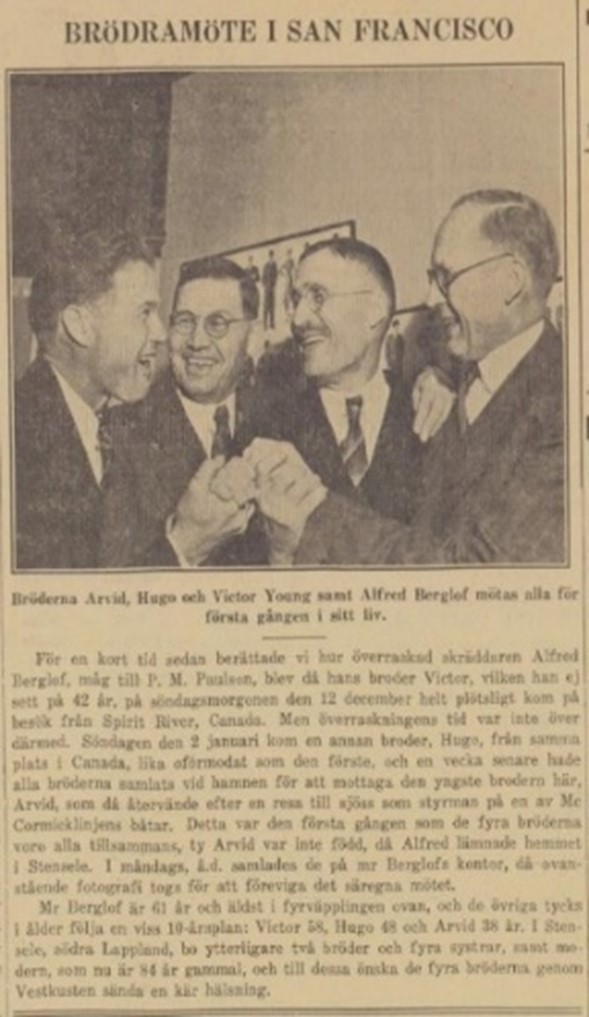
VI. Farmor Lilly’s 3rd oldest brother Victor also heads for America
Since the first winter of 1900, Johan August Ljung (the oldest son from the family in Lönnberg) and his brother Victor worked in the forest timber business. They earned a few crowns per six- day shift, adding to the state tax base and the family security. Anders August, the father, saw a difficult future for his boys to stay in the Stensele area with traditional cultivation. So, he buys a plot of land, four and a half hectares, some five hundred meters down the hill in Lönnberg, a part of the piece sold by Johan Isakson to Karl Pehrsson on his departure for America so many years earlier.

Before delegating this new acquisition to Victor, Anders August the father means to clear the main house for August Anders, his eldest boy. August Anders, son, should start his own family on, at least part of, the old family estate he thinks. August objects, however, and demands the whole estate, clear or not at all; so, father decides against sharing the farm among his many children.
Spring and summer 1904, the Ljung boys are busy building a retirement home for papa and mama: a “fargångshem” home for the deposed parent, where Johanna lives forty-five years as fargångsmor, compared with thirty as the only mother of the main house. August Anders, the son, meets Ester Victoria Nilsson (b. 1881) in Stensele at church. She lives in Björkberg, halfway down the Ume and south ten kilometers, where Hans Jacobsson originally broke the turf in earlier days. They announce their engagement in the Lycksele church, where August spent his military year. Nine months later, June 1904, the Lönnberg construction crew breaks to join the girls and Arvid in the first row of the newly built Stensele church (tallest and most grand church in Lappland) for the wedding of Anders August and Ester Victoria.
The congregation in Stensele assembles from Skarven and Ankarsund, neighbors from Björkberg and friends from Lycksele, to hail the future generation. Lots of relations, happy to meet, and talk of the changing world, children in America, and they celebrate the happy bride and groom.
Back on the hill, the crew finishes the “fargångshem” fast. Within a month of the wedding, Anders and Johanna, with five growing children, move into the neat new cottage beside the big one built by Isak and son (b. 1861). Victor keeps his room in the big house since he deserves more space as the oldest, or at least Anders convinces August of such. Lilly stays on since Ester soon needs a “piga” to help with such a big house and children. They pay sister Lilly seventy-five crowns per year, with food and bed, of course.
Victor works primarily with his brother August, though not easily, while Anders (dad) keeps the younger boys, Erhard and Hugo, busy. The older brothers grow farther apart with their contrasting lifestyles. August lives a strictly pious life, seeming at times more conservative than the older generation. Victor serves his military duty in Umeå, where he learns to drink with the sailors, and enjoys a good rowdy brawl. He thinks lowly of his brother who serves in a church- oriented regiment out of Lycksele. Victor often tries to prove his manliness, while August works patiently, with trust in the church and security in family or so I am told.
Anders August, the father, senses the problem and promises Victor the piece of land down the hill. First though, he presents August Anders, as heir, with the standard “fastighet” (estate) contract. According to the church documents and private records, the young couple receives the main house, the barn, and all structural contents – also ten hectares of land. This parcel includes two hectares broken potato and barley field just behind the house; three hectares of meadow and swampy grassland over the hill for the cows and summer fäbod, and five hectares of thick forest which gain value as the price of timber climbs.
Wedding presents to August Anders (according to the book): one eighth year old horse, one cow, one goat, one table, four old chairs, two bed mattresses, one large bed, two pillows, and some other small items. To Ester: another cow, a down cover, one pillow, more blankets and bed covers, one animal skin cover, and more unreadable items. August records all this in a small black book, from which I translate. The book also shows data on his children and the annual output of the farm. August and Ester Ljung inherit a well-established place on the map.
In return for this fine situation, August and wife oblige their lives it says, to care for his parents until their death. The contract includes a clause for the Ljung brothers and sisters until they reach the age of twenty, which Victor surpasses and Erhard then lies on the border. Anders August receives food for his own cow and goat, he also reserves a section of the barley and potato fields. Four liters of milk and a half kilo of butter or cheese transfers each week from the “fastighet” farm to the “fargångs” farm. The older generation also needs access to the water well and enough wood to keep their little house warm and cooking – a lot of work for the newlyweds to keep the fargångs family fed, but they all participate and do what they can. Then, Ester begins a steady addition of youth to fill the hill. But hard work runs deep in the blood, stronger than any stipulations of a contract, and everyone helps out. As for the brothers and sisters, they work regardless of the source.
Victor also answers to August despite his wild inclination, as long as he lives under his brother’s roof. While Anders August and Johanna live healthy, they don’t know the meaning of respite or laziness, but contribute every ounce of their taking. Lappland obliges its conquerors to serious labor.
Through the winter (1904-5), August stays close to his new responsibility, but he also takes work with a part-time local lumber crew who work two and three day shifts in the woods. Victor enjoys the more major excursions and travels with his timber group, who might stay away many weeks at a time. This full-time gang moves up the Ume River on one side cutting the biggest trees available and close to the water for springtime transfer to the sawmill in Umeå.
They return along the other bank again felling the oldest richest pieces. Each crew signs their logs with their special mark, then the lumber company accounts for their being received at the sawmill in Umeå. This early period of Lappland lumber companies has trouble respecting or even distinguishing property rights and shows no coordination (no government regulation) to control independent operations and common environmental stewardship. So, the riverbanks clear first, then the opposing hillsides, all abreast of the river.
Victor’s gang rushes ahead to find the easiest logs – money first. They work with ten men and one horse, using a simple drag-brace sled method of moving the huge pieces to the riverbanks for spring flotation to the city. Victor likes the rugged character of his new buddies. He returns to Lönnberg restless and less conforming than ever. In the crew, he meets a fellow from Långvattnet just returned from America, Pehr, again exposing the contagious America fever to a vulnerable young Victor.
Anders detecting discontent, prescribes the traditional family farming remedy. He fulfills his promise to help start the little farm for Victor down the hill. Put Victor to work sounds proper to clever father, and first they must build the house he says. Victor begins with fire, levelling the ground and preparing the logs in early spring 1905. Anders August designs another simple two- level knotted, timber house with four windows, a cellar for potatoes and food storage, and three sleeping rooms upstairs. Slowly, Victor loses interest as the family works fast to make the project a long-term reality. The entire financial burden rested with Anders August – Victor barely saved enough to support his loose meanderings. So, father demands submission to the ways of old, but he sees his son slipping away from the fold. He takes his frustration out on Erhard and Hugo, who work hard for big brother Victor’s new farm. They all lose interest, however, as Victor spends more time in Stensele, then stays away from home for three days without warning. Instead of finding work with the flotation crew, which follows their timber to Umeå, as August the father suggests to make Victor pay for his board, Victor announces his plan to marry Anna Brit from Gunnarn. This completely takes him away from the construction project, and the Lönnberg crew calls a half to further operations. After a hasty Stensele marriage, Victor and Anna Brit move into a summer fäbod near her family farm. Victor sets to work tightening the walls and trying to insulate for his new family and the coming winter. He leaves his wife under her mother’s care, as the fäbod has no stove, but for the open fire on the floor and a hole in the roof. Victor probably enjoys living as the “Samers,” but Anna Brit returns home when timber time arrives and her husband disappears.
Another lumber season in the woods (1905-06), and the seemingly confused Victor again meets with his buddy Pehr from Långvattnet. The confining prospects of a wife probably opens a susceptible hole for the re-entry of the fever, and this winter, it boils in Victor like hot lava.
With a lonely pregnant wife and unfinished business in Lönnberg, this wild character decides to start saving for the big move to America, they say. Pehr’s return after three years of hunting, trapping, and fishing the frontier wilds of Canada, leaves a potent seed for the feverous dreamer. Maybe all they think and talk of during the short pauses of the hard-working day and by the fire in a “timmerkoja” stems from a common dream of conquering a real fortune.
The America dream fever, of course, burns hot in the temporary shelters built along the path of fallen Lappland timber. In Canada, they see enough forest to prosper, keeping back the wild.
The brown bear sleeps while the polar bear thrives in the snow they say. The Eskimos, like Indians (natives) in America and Samers in Lappland, know the country better than the colonizers. Of course, springtime brings the lucrative fur trade. The wild landscape might resemble a war zone from the tales of a nostalgic Pehr. But cities filled with fancy women, and money like no Lappland farmer imagines, wild whiskey parties and weeklong binges with a different broad each night, for guys like Victor, this would easily kill the time before the next forage for fur in the cold and the dark days. So, Victor loses any reflection of old home or new family. What means Lönnberg or Gunnarn when he sights adventure and fortune? Think of Alfred in San Francisco, who sends the proud message of rapid success. In these early 1900s, we see the influx of letters to the old country from the wandering young Lapplanders and the America exodus exploded. They tell of fortunes, wide open farms for the taking, and a need for hard workers in the cities and everywhere.
Whereas Lappland conditions the spirit of this northern work and climate survival, this naturally drives the Lapplanders to Minnesota and Canada where other Europeans might fail to prosper. Money from the simple factory work also sounds like riches to the Stensele farmers. The popular argument that life in America corrupts with movies, theater, and circus, appeals to the old guard of tradition and religion, but fails to hold much strength in the hearts of the ambitious and young like Victor, learning science and culture from progress and the stories abound.
Innocence learns to dream of riches, and evil gets dismissed as myth for these rugged young men, who might easily turn away from family and church to live in a future without limits and no restrictions of old morals and traditions.
Spring 1906, and Irene says Victor seems busy and content with the little house project in Lönnberg. One fine sunny day, however, Pehr strolls up the road with his pack and walking stick. Victor, I am told, slams his axe into the height of their building efforts, and jumps to soft ground from the level of the roof. Laughing hard, he rolls twice and to his feet he runs up for his bag, which lies fully prepared in the big house. Without forewarning, though Erhard and Hugo know a hint of their brother’s plan, Victor announces his farewell. He kisses his mother and quickly shakes hands with an astonished father Anders August. Kiss kiss to little sisters and baby Arvid, also he pats his rough hands on Ester’s two infants.
August probably looks with disgust on this power of Satan. In answer to the overhanging question, Victor promises to send for his wife as soon as he earns enough for their tickets. Pehr claims the impending fortune will suffice for a big family after only the first season. August swears to him that of course, he can never return if he deserts his family like this.
After the bitter and tearful departure from Lönnberg, Victor leaves his wife hysterical in Gunnarn. Anna Brit’s father thinks to go for his gun, but son-in-law swears on the Holy Bible to send tickets by Christmas. They all learn to forgive the wild young spirit when he holds true to his word, they say, and Anna Brit, with six-month-old Beatrice, leave to join the new world (Is this really true?) And Victor finds the stories from the “timmerkoja” only a slight stretch from reality; and with Pehr, he earns a relative fortune in the new world, while living as wild as the heart can desire. Success spoils resentment, and Stensele learns to accept the radical steps of the fortune seekers, I guess. The atmosphere back home in Lönnberg, grows more pious and conservative since the departure of Victor. They all wonder at the futures for their family with their two representatives abroad. But tradition carriers the future for this time in Stensele. Two more Ljung daughters marry into farming families. Jenny moves to Näsvattnet 1908; Ester to Gunnarn in 1911; where both work as busy farming families with all the old bonds of church, family and hard work to survive.
VII. The Continuing Story of Farmor’s Family – the Ljungs
Formal school education enters this picture around 1906. Anders August might know two days of religious schooling. As a girl Johanna lives closer to Stensele and attends maybe a week or more of class at church. The older Ljung children study on their own once they establish a situation, August writes extremely precise as early as 1904. To assume this ability comes from schooling outside of the home contradicts the usual situation of 1900. Irene begins a class in Vinlidsberg some two kilometers around the hill from Lönnberg in 1906. This follows a growing tradition. The few seminary trained teachers available travel from village to village where they might stay two, three weeks. The community provides someone’s house or a heatable extra shack. The only time for school falls during the winter which means hearty traveling for these usually female teachers. These few weeks create an immense opportunity for the isolated children. They meet with their neighbors of like age range, maybe playmates from a Sunday in summer. They study the Bible, learn how to add, and subtract, practice writing the alphabet, and for extra fun the teacher reads history stories and shows geography. The young farmers concentrate a maximum effort into this short chance, their parents envy the worldly abilities.
Though there also hides a certain mistrust of the notions, which set their children to dreaming and questioning tradition, with restless ideas far away from Stensele farms. Lilly Charlotta, my farmor, attends a total of sixteen weeks in primary education like this. She continues as “piga” for August’s growing family. Ester the wife spends her time pregnant and feeding small babies. Two girls in a row Alice (b. 1905) and Adele (b. 1906) then a still-born boy in 1908. Sister Jenny marries Manne Persson and moves to Näsvattnet. Irene follows along as “piga” for this young couple. In the winter, she works in the kitchen and with the cows. For the summer she concentrates on the dairy lines as “getare.” During the quiet winter months, Irene gets a chance to attend another school in Grotanliden. By fall 1909, Irene learns her place in the home baby delivery service. Jenny’s first baby arrives with only one other woman to help. The thirteen-year-old Irene takes kindly to her nursing role. In childbirth or sickness, these young families face the same hard times as their parents. Though the world advances around them, they still start as settlers to build a strong farm and home for families who learn to move far away.
During these years, Erhard fulfills his military duty, and Hugo attends school in Skarven. Although Erhard might stand next in line for departure, he winds up the last Ljung to leave Lönnberg. Hugo, on the other hand, gains contact with the headmaster Bergström who acts as a heavy influence on all those he encounters, and they learn to guide their community. He grows up in Mälarna, halfway between Lycksele and Skellefteå, with a farming family he chooses, to study with the clergy. After three years at the men’s seminary in Skellefteå, Hugo decides to begin teaching, instead of studying theology, at the university in Umeå. Meanwhile, Långsjöby has a strong demand for its own school. When Bergström arrives there in 1906, he receives enthusiastic support and cooperation from the isolated community. They build a small schoolhouse, and by 1908, they have three class levels and two more instructors. Hugo begins teaching in Bergström’s first year. Eventually, they organize an extra-curricular group of community minded youths to fight the sins of alcohol, which Hugo supports to show how booze is corrupting the old ways.
It seems the influx of world culture brings out some of the older Viking spirit and early “Samer” days in this lust for beer and “brännvin.” This causes the church minded like Hugo Ljung to stir up a movement for alcohol prohibition in Sweden. They join with a formal organization from the United States: The Independent Order for Good Templars, a group stemming from the Knights of Jericho in the 1840’s an offshoot of the free-masons, like Alfred’s Masonic Temple. The I.O.G.T. proclaims sobriety and biblical morals without specific religious doctrine. In Skarvsjöby, at the monthly meetings they might organize an auction or divide up the women for sewing circles. They talk and drink coffee, they enjoy their like-minded sober company and moral discussions. But primarily, the good templars mean to distract the youth from the evils of beer and “brännvin.” They condemn drunks in town who tempt boys who earn money as lumberjacks and flotation followers. When the spring celebrators from the bars in Umeå return to Stensele meaning to brew beer for the summer, the I.O.G.T. steps in to spoil the batch. The drunken days of army and lumber life carry over easily to the simple family farm in Lönnberg. But Bergström and company dominate their supporters to make hard working sober farmers, moral and ethical models for the community. By 1910, one hundred sixty thousand sober Swedes attend the meetings of some twenty-four hundred chapters of I.O.G.T.
Hugo gains a lifelong advantage from this association. Innocent America travelers often fall prey to the expense of evil temptation. While Victor carries his strength and luck, Hugo learns discipline and thrift. Fritz Johansson also falls under the Bergström influence. He begins school in 1909 and studies with old Jonsson while Bergström enjoys his headmaster status. Fritz makes friends with Hugo who brings Erhard and Lilly to meetings. Erhard sits dumbly, while Lilly eyes the active Johansson. She sees Fritz earlier in 1911 on skis going to visit his then girlfriend in Stentorp. The extensive encounters over coffee and moral discourse proves more stimulating. Until 1913 when Lilly moves to Lycksele to study at the seminary, their casual meetings yield no more than a mail correspondence. This continues while Fritz does “lumpen” his army year in Umeå. Fritz works in construction and road breaking, as well as long trips up the Ume to Tärnaby, when Lilly returns in 1916. They call a halt to continuing the relationship.
This brings up a period of greatly improved communications for Lappland. Lilly and Fritz live close to the roots of worldly contact for the area, and the news spreads quickly to the military towns that war thunders on the continent of Europe like never before. Sweden maintains its neutrality through this brutal conflict. The simple farmers of the north thereby keep a semblance of their innocence and ignorance intact. News from relatives in America, however, takes higher priority than concern for overpowered French and Russians. The postman makes the trip over the Ume from Stensele once each week. He brings letters from Alfred to Lönnberg and the Ume Bladet newspaper to Skarvsjöby shared by written correspondence and orally among family. The subtle invasion of the world into Stensele kommun leaves most unaffected. But they latch onto the necessities, they relate easily to news of food and farms, politics and culture seem irrelevant except in terms of taxes and religion. This following example of correspondence from the new world details closely the prevailing attitudes. Johan Isakson writes to his sister Johanna. I can’t say that they ever read this in Lönnberg, as this copy comes from a relative to the Bergström mentioned within. It compares easily, however, to the situation of Victor and might inspire Hugo’s sudden move.
From Leonard Minnesota the 16th April, 1911
Dearest Sister,
Here in America the winter is finally over. Somewhat snowy and rusky it has been. In some parts, especially in Canada, places unused to so much snow, there fell some four feet of it. Here in forested Minnesota, the snow has been around two feet deep, but it is all thoroughly melted away, and the lakes are without ice. The time to sow and plant begins, and the farmers occupy themselves with preparation of the farming equipment.
One with such a fine settlement as mine for example, with similar tricks of the weather and farming problems in Västerbotten Län would be much worse off. I can now with even comparison say I am more satisfied with life here. Free from many inefficient chores there, which were often unable to solve the problems at hand. Life’s necessities come easier. Here they eliminate many strains on the working body with machinework. Here is the immediately perfect situation for the country farmer in all walks. I could point out many many things which become unnecessary here.
But as I began to say, winter is at an end for 1911, and maybe I can tell a little how I occupied my time during the same.
I have played an old Pehr Erik and an old Per Johan from Bastuträsk in land and moss, also lakes and streams where I captured wild animals. Ten wolves. 26 minks. One fox. 20 skunks. And over 200 muskrats. These latter are a type lake rat, which this year paid less than last, just thirty cents for the best. Therefore, the sum has not left a huge leftover. It encompasses 280 dollars. The rest of the skins paid less this year also. The rest of the time I worked with household duties and watch-making. When I needed to travel long distances, I went with the railroad. See, we have only some 500 feet from our yard to one where the train goes daily. And only one half kilometer to the village and the railroad station. This is now my short winter saga, for which I can merely thank our Father, in keeping with our age. Greetings from mother my wife, whose problem with rheumatism keeps her down while I stay active always moving around. Our life’s evening time is arrived and we have the inevitable wish that with God’s good will we can keep like children, through Jesus Christ in eternity, and we hope that even this is your and your husband’s good fortune also.
With brotherly good wishes, Johan Isakson
Johan writes this first letter at sixty years of age. Victor who he mentions in this second letter possibly refers to Victor Ljung though he says nothing of relations. I presume that uncle and nephew contact one another, and the occupations relate closely. This second letter contains more interesting reflections of home and comparisons of life. It seems he sends the first and how they wind up together no one knows yet. Again, I translate directly and try to keep the funny spelling of English words in Swedish like “Junajte stäts” and “mitsjarpp.”
Leonard, Minnesota the 15th June, 1913
Mr. Anders A. Ljung, Lönnberg Dearest Brother-in-law,
When now in good time for long since I last wrote to you and sister, many times we think well of you and ask if we have not heard from you, and maybe sometime amongst yourselves you think of us and ask the same question. Anyway, the answer must be that not for a long time.
Therefore it bears well that a correspondence from us on this side of the Atlantic will not be unwelcomed, the same from you would give us great pleasure with hearty welcome. We have now here received a newcomer from Stensele with the name of Johan Bergström, through whom we have heard a little of each from our fatherland. He thinks that the warmth feels a little much, but overall he is healthy and feels good after the trip. If the welcome can be good, it is here in the country of good salaries appreciated, and for one with the English unknowing, the encounter comes in great need with fellow countrymen.
And now midsummer time is here and the weather is unusually warm. It has been nice with you also we hear, but most likely with more rain than here. Here we could certainly use the rain, it is so dry. We have just finished planting the potatoes, and it appears like this: that if one plants early the summer is too long and they begin to rot from being overripe, and in the cellars one cannot lay them too early without taking some damage. Then there is another thing, we have the bogg, an insect which eats the potato skin, which comes much less with the later planted. This trouble is a land’s plague for him that doesn’t watch with care or spray them with insecticide (“Parisergrönt”). In a few weeks, half the potato core is naked if one doesn’t catch them in time. We older have set in over two acres. Very near two Swedish “tunnland.” If it goes as usual, we will have many potatoes to handle and ship out in carloads to the big cities. In terms of shipping loads and produce in America, the deals move in large quantities, which you lack, and even in many others, Sweden lies far behind.
I would like to compare the figures that speak for themselves. This list would get long if one talks of both the light and the dark sides. From that which I surmise from one of sister’s letters, America can provide very well when it comes to lighten life’s holding necessities than in Sweden. This is of itself nothing to wonder over, though there are many who disdain this thought, and certainly are many the authorities in Sweden who from any imaginable ways seek to paint America in dark colors, which though they know not they primarily try to sorrow those in both countries. I myself have not had one thought that the situation here has been or will stand so far ahead of that in Sweden that this in reality is so. But he who has it well in Sweden does best to stay where he is. Within Västerbottens Län I have good memories, and many with me – how difficult it can be for a farmer with a large family and the problems that follow this situation in Lappland.
For example, I would like to compare a few actualities, facts. First what one plants here, it grows unfertilized if one cares for the land well and leave it now and then in respite. In Canada, it happens often that frost hampers the plants, but seldom with the “JUNAJTE stäts.” Then we have the hay harvest. Fine harvest homes for the cutting crews (in comparison with the ancient fäbod). Quick pickup. No wet mushy swamp meadows, within an English mile from home, for the most part we have all the hay necessary. No lapp-reindeer and therewith none of the pursuant problems. Yes, and many others, which to you would be well known. Everywhere over here they build railroads, and good communications, and everything in the way of food and clothes is cheap. No High Taxes. Many promises of potential for the sober and work willing new builder. No tax until it gets assessed. Under 400 dollars worth – no property tax.
Practically none anyway even if it goes over this value, maybe two or three dollars “TACKS.” I have six dollars in “proberty” and thirty dollars in land tax. If it were assessed in Sweden, and taxes as high, this could prove an unbearable and dangerous tax. It becomes in value comparisons one fifth of Swedish tax.
That which adheres to the dark sides, here in this land holds to the Trustee bank holders. The large money magnates try to raise prices constantly, that which we pay in dollars you pay in crowns. You have no idea how people here can choose such authority that can keep the good powers for small folks, and vote for such laws that reproaches the Trustees. Laws which give the people more rights to dethrone untrustworthy judges. Vote away the taverns, dens of iniquity, and all such slop which destroys many peaceable men and women’s tranquility. And then it lights in this direction and thus prevents also more and more all slop that wanders in who make life and sanity unsafe certainly in the large cities very prevalent.
As is, I can not fully explain how big America is. Fourty-eight states and even Minnesota is nearly as large as Sweden. Not undoubtable that much can happen within such a large land.
I will now turn away from these things and in short, explain the new settler’s future. For example, Victor. He has nearly a problem free farm. Twelve cows, two horses, efficient machinery, and he reaps four to five hundred bushels yearly. A neat and pleasant farm, and he will not under any natural circumstances or manly law, earthly object and climate, change places with Sweden for this land. He has twelve English miles to the railroad, but this will soon also change.
Young people have also recently bought land bordering with Victor’s, and have still some thousand leftover. These sober and thrifty kind of men make progress. And show me an example of the same within Västerbotten. I couldn’t see any near future for me and mine in Sweden, but like this, it appears a proper holding to be valid. My youngest daughter who now finishes a course through high school has now for thirty-five dollars per month in food preparation with Johan who drives with road and forest-timber work. Ferdinand (son) has a watch shop in Leonard and a deal in the lumberyard. Also, he handles a wood crafts store and “mitsjapp.” My son-in-law Robert Lundmark married with Tekla, has sold his farm and built in town, and is head authority in the affairs for which Ferdinand works. And so on, everything depends on the times and luck. Now I have possibly unnecessarily taken to words, but I beg of pardon and will not have meant ill. Some things fall hard for a small farmer and beginner and it is tough without a “piga.” The rich search after “svänska” girls and all good girls, with five or six dollars per week’s pay, and that is such too much for a new settler to pay. Finally, a warm greeting to you all,
Sincerely
Anna & Johan Isakson
With apologies for the “rusky” translation, I try to save some of the ancient style prose. Johan obviously holds a strong bias for his newfound land. These letters either never arrive or Johanna sends them elsewhere. They fall into the hands of a Bergström relation in Malmö, who sent them on to Astrid and Knut Bergström in Storuman. Or Astrid sends them to Margit Sjöberg in Storuman, both daughters of August and Ester Ljung, I don’t know. The sober attitudes which reflect on the poor Swedish farmers, draws as much as the tales of fortune or adventure in the forest. Victor might not really fit into the ideals of the sober and thrifty farmer. But Hugo suits this description better. This type of letter gets passed around the villages, and many others of similar style appealing to different tastes arrive to all corners of the crowded Lappland area. The bait sets a sore to fester over many strenuous hours in the field for dreamers imagining the easy life in America. Interestingly, Johan never mentions the Swedes who long for their families, homeland, and friends.
Lilly starts teaching school in Stensele, and Fritz involves himself in the cooperative movement, practically like socialism. And Hugo still lives at home in Lönnberg, passing twenty-six years. He works onwith Erhard and Arvid to finish Victor’s little house.
The log cabin format works on a circular construction program. The opposing walls have to mirror each other in height in order to hold a sturdy roof. In the ten years since the project last felt progress on the farm in Lönnberg, the weather has piled melting snow inside. The foundation shifts and some knots loosen. So first, the boys must tear it all apart and fix the ground. Then they bind each knot tighter with extra finesse and preparation, they supplement with new moss for an extra winterized wall. The ground shifted very little but by rebuilding they assure the strong structure a long life. Hugo also shows meticulous care with the roof.
For the roof, they use seven straight twelve meter pieces. They only need to bevel at the ends to fit into the holes in the wall truss. The main ridge beam needs support from the other six which fasten to the sturdy walls. A series of trusses and rafters join the beams to form a skeleton roof. In this 1916 construction, they use more metal nails than before, when the wooden plugs fitted into bored holes in the beams and the wall suffices along with lashing roots to fasten together the trusses and rafters. On the skeleton, they lay thin pieces of board or thin log depending on the availability of a saw.
Hugo cuts the hewn poles in half to lay an even layer for the roof. This holds the green birch bark which must overlap and cover entirely with strips running from the ridge down, overlapping like shingles. Then, a layer of wood shingles or possibly dirt and moss to finish off the cover or dome. The “näver” birch bark acts as the water repellent, so a top layer can add to the durability, and protection. With dirt roofs the water not frozen like snow, soaks through the dirt layer and runs down the bark. This demands some turret spikes to hold the dirt at the ridge and the gutter, but as the moss grows thick, the roof gains power over the weather. These old roofs retain their layer of “näver” even today but under tin or aluminum it is better.
Hugo has lots of help from his father’s experienced house design and the labor of his brothers, but the question remains as to who gets the house. As regards age, Erhard claims full right. In terms of interest and potential, Anders August encourages the older son Hugo to overtake the responsibility. But winter arrives early in 1916 and Hugo moves into the bare little house until Christmas. A mild case of influenza keeps him out of the forest, and he lives with all the small children of August’s family. These two brothers get along, while Erhard works for Kramfors A.B, (the lumber company or the electric power company?). August tends to his farm and the children, Ester expects her eighth child in the new year, and Hugo rests. The crowd affects him, he worries about the epidemic sickness that the newspaper reports, and he thinks about America. Bergström comes to visit Lönnberg. He says the family there might need a school of their own for so many children. Arvid also joins their discussion, since Hugo stopped attending I.O.G.T. and the girls moved away, Arvid also lost contact. They talk about the war in Europe.
The Ume Bladet knows nothing, says Bergström. He worries about a chance the fighting will come to Sweden through Norway. He has friends in Stockholm and Oslo he says, with whom he corresponds. This pleases Arvid who looks for excitement. Hugo trusts the will of God but wonders how he can travel to America. The teacher Bergström promises to ask his friend in Malmö right across from Copenhagen and encourages Hugo to pursue the idea. Stensele has nothing to offer in terms of a real future, and so Arvid listens closely. Hugo, on the other hand, decides to leave in the spring. Bergström suggests Hugo should stay with his friends on the way down country.
The sun penetrates its comfort as early as March in 1917. To the pleasure of the whole family, Hugo arises fresh, healthy, and inspired says Irene. The work on the farm begins as soon as the weather permits, Hugo and August dig a new irrigation ditch to by-pass Ester’s flower garden and then down the hill to cross the potato field, a fine location for the little house. Hugo informs Anders August of his plans to leave as soon as possible, thus leaving the place to Erhard. His father faces the disappointment that the land won’t support all his children like he wants. Lönnberg serves them well, the Ljung family enjoy a high standard in comparison to many in the neighboring kommun. Hugo remains bound to farming, he feels the security and instinct for the ground. As Johanna knows to sow the corn early, from the time before she had Lilly (1894), she controls her body in harmony with necessity and nature’s flow. The boys break the ground early. They fertilize all the way down the hill promising Erhard a fine harvest. The snow melts fast and the time for planting involves the whole family. Even little Henning, six years old, throws barley and potatoes, he tells me. They build up Ester’s flower boxes and garden, she lies with the newborn Astrid.
Västerbottens’s “län” at its largest definition (a state comprising myriad kommuns), encompasses some sixty thousand square kilometers about fifteen percent of the entire country of Sweden. Population in the area rises fast from 1900 to 1920, a fifty percent over-all increase, totaling one hundred eighty thousand by 1921. With a negligible percent of arable land, the forest expands to about forty percent of the landscape, while the lakes, swamps, rivers, meadows, and tundra dominate the rest. This proves a mighty expansion to the original study of 1671, which claimed the area capable of supporting a mere fifty-six families. Because the lumber industry manifests the only capital interest in the area, farmers struggle to support the few that stay, and most supplement with winter wood cutting. Another alternative, of course, is America.
Hugo picks a difficult time to leave, but America calls, and Sweden falls. The figures for emigration from Sweden at the time, amount to such a small fraction that the relief on available farming land seems negligible. Four hundredths of one percent (0.04%) in the Swedish population move out of the country in 1910, which represents a peak in the climb of the numbers of exits since 1890. Seventy-five percent of the twenty-four thousand emigrants in 1910, moved to the United States. The decline in these numbers begins around 1912 when only eighteen thousand leave Sweden. Immigration to Sweden shows eight thousand inbound, half of them from the United States. In 1918, the figures reach an all-time low for this century: fourty-nine hundred emigrants match the same number of immigrants. This year also marks the thirty-three percent rise in Sweden’s death rate, as a result of the Spanish flu epidemic. By 1922, the figure moves back up with Europeans moving to Sweden and most of the twelve thousand emigrants on the way to America. These statistics come from the Swedish Almanacs of 1917-24, published by Kooperative Förbundet. Two other examples show some effects of the war and the flu epidemic. In 1916, 10,571 emigrants, of which 7,268 to the U.S. and 6,713 immigrants coming to Sweden, from the U.S. 2,989. In 1919, 7,300 emigrants and 7,800 immigrants. By 1925, 40% of the original Ljung family had moved to America. So, Hugo picks a difficult time to cross the Atlantic.
His reasons for leaving include overcrowding, sickness, and a lack of opportunity. Also, there appears a yearning for adventure and the competitive drive to match the efforts of his brothers. Letters from Alfred tell of the easy success for a Ljung turned Berglof in the city. The little contact notes about Victor describe him as settling down into middle age and a farm just like his parents, but for the fact that he promises a college education to his children and already drives a car.
Hugo looks at the little farm down the hill from Lönnberg and sees his future in the face of brother August. Simple and traditional, trusting the land and God’s will for survival. They pour cement for the floor of Erhard’s barn. Hugo makes a ball of the cement and presents it to the young Henning. Anders August leaves shavings all over the kitchen floor of the new housing making furniture for his children and everything’s finished. Irene, Erhard, and Arvid plan to move into their little farm this week. Irene just returned from Näsvattnet, where she cares for the sick family of sister Jenny, who has caught the influenza. So, Hugo tells her how to fight and weaken the fever. But thankfully, she has a mild case and deserves only rest after the exhausting month caring for a whole family down with the flu.
Anders August lets Erhard take the horse and wagon to ride Hugo to the main road in Stensele on his departure. Earlier, he (AA) presents his son with two thousand crowns for the trip and to help start a good life over there. Anders August, of course, reiterates the importance of farming and contact with the Lord and the family. Johanna sorrows heavily to see her third son make the distant voyage. Big brother August reflects on his own situation and makes little of the comparison with the potential in America. The idea passes when he thinks of Ester and
Astrid inside. The stagnant Stensele scene overwhelms Erhard, he can’t think of taking the step out of the firm security at home. Irene wonders at her lack of strength, being a woman how could one see the world alone? Arvid swears this manifests the only plausible alternative for a thinking man like him. The future means to take the world like a Viking, he tells his sister. To America he dreams, the rich fair maiden, a proud eagle opening her wings to thee.
Along the bumpy road from Lönnberg, they hear the church bells from Stensele. At the house on the hill, the view of Stensele reveals the face on the giant cathedral. The bells call the congregation to worship, they announce a marriage, a baptism, and a death, but also seem to lift the spirit to the sky. For Hugo, it brings back memories of home and the family on their way to church. It all returns to the One who looks over us, protects us, and subjects us to His fate he thinks. But beware the devil’s corruption, the world is full of sin. Shelter in the Lord’s protection. Submit your life to Him. The bells ring and they toll for the wandering, fearful, leaving, alone and unsure. Bring the community with you it says also. Take our comfort, it holds dear to you, in the memory of the land we share, I guess.
Erhard turns around at the schoolhouse, where Lilly teaches the “arbetstuga” children, who come from far out in the country and must live at the school. A scruffy looking lot, but Lilly looks like an angel amongst them. The good-bye passes quickly, she sends greetings to the other two brothers if he travels that far. “Remember we miss you and love you. Write to us often. Good luck. Be careful. Don’t forget us. Go with God and pray for peace.” She says and Hugo just nods, the emotions build up to the mistrust of talking. He recites a short verse he wrote in 1913, it remains in Lilly’s poetry book, which Arvid started in 1914. “Tro ej kärlek den saknar/ Tro ej vänskap den veknar/ Tro ej löftesrika orden/ Tro ingenting på Jorden/ Tro ej, förren döden en gång vinkar/ Tro på mig.” 28-1-1913, H.L. In English it might go like this: Believe not in love it goes lacking/Believe not in friendship it weakens/Believe not in the heavenly rich promising words/Believe in nothing on the earth/Believe nothing, until death one time whispers/Believe me.
This is mixed up with Arvid’s departure several years later, I guess. So, Arvid, like Hugo, decides to walk to Gunnarn and catch the mail wagon from there to Lycksele tomorrow. This gives him time to think and organize his trip and break in the shoes his father just made for him.
With all the money Hugo has saved, the only danger remains in keeping it safe from theft. He has addresses in Lycksele from Lilly, Umeå he knows from his military year, and from Stockholm to Malmö his map from Bergström comes with pages of advice and addresses.
Outside of town, each of the boys must have delighted in munching the lunch packed by Johanna: leftover pancakes, fresh bread, some cheeses, and smoked meat.
Of all the memories, food sticks hardest to the practical side of life. From the long shallow bowls of milk in the morning, into which they dip the slices of bread sopping up the cream first. Then a long day in the field and lunch on the ground, to return home and the warmth of the stove filled with aroma of food makes each evening at home special.
In memories, food seldom arrives with more than plentiful quantities. Especially for the boys, the worst times follow the hardest times to get food. But in the summer, after a fishing or hunting success, the meals could flow. Potatoes and fresh homegrown vegetables with loads of bread and the “catch” in sauce.
For dessert, the forest provides Lappland’s delicacy in berries. From “smultron” (small wild strawberries) to blueberries (“blåbär”) and “jortron, vinbär,” and “lingon.” The real strawberries in Laappland might grow as big as potatoes in a sunny year. From “saft” concentrated fruit juice, to “shilee” (where they take just the meat of the berry and make a puree for cakes and cookies); from cooking jams and preserves to eating absolutely fresh berries with sweet whipped cream, one enjoys prosperity. And with success, they make more soup from “blåbär,” and rose-hips or “nypon.”
Thursday all over Sweden, means split-pea soup and pancakes, which brings up the secret for waffles and pancakes of which only the Swedes of old might know. Hugo thinks of Johanna, his mother, and creamed waffles with jam for coffee of a Sunday evening probably wondering why anyone needs America. But, steak and potatoes, coffee and sweets exist all the world over, and food seems especially prevalent to the U.S. diet. For the hard-working young like Alfred, Hugo, Victor and Arvid, who plan to stock up a fortune in food, this is not merely a dream.
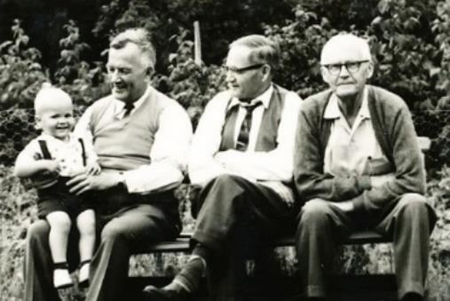
Figure 22: Anders, Fritz, Hugo, Alfred – Hugo and Alfred’s visit back to Sweden (early 1960s)
VIII. The Ljungs after Hugo also leaves for America
In Lönnberg, Erhard starts his own little farm. With Irene and Arvid he has a built-in family, as well as the finished product of all the brothers’s labor. It seems an ideal situation, although stove and kitchen soon grow outdated when iron stoves and running water take over. The barn and two cows gradually expand to include two sheep, a goat, and several chickens. Irene naturally assumes the job of housekeeper, and Arvid pays his rent with all the labor Anders and Erhard can press out from him. The young and confused family live far enough away from the parents, Anders August and Johanna, who finally live alone right next door to the busy August Anders Ljung clan.
When the weather cooperates, the summer stays dry, and all the agricultural tricks passed down through generations and history succeed to harvest a plentiful crop, life in Lappland matches the happiness of life anywhere, one can argue. Here, with God’s will, on the established farm, August Anders and Ester Victoria work constantly, but their eleven children grow up in warmth and clean clothes, with lots of farm food and family security. In the week before midsummer, the spring work might finish early and a whole week of rest from the usual toil occurs to follow. Then, when the crops lie in the ground and summer’s “storhelg” celebration distracts the family’s attention for a midsummer feast. In the last fifty years of the 20th century, the midsummer festival gains popularity. Today, the folkdancers in their colorful dress surround a maypole in nearly every village of Sweden. Lappland at the time, however, might only yield a brief one- or two-day break from the full-time toil of farming in the Arctic.
For the Ljung family, midsummer in Lönnberg usually meant moving to the fäbod. The “getare” already tend the cows finding the sunniest spots to eat the new grass. Before the introduction of cars to the area taking time for a Sunday in church for midsummer takes a low priority.
Anders August has certain major holidays when he takes communion, now in retirement he often orders Erhard to hitch up the wagon and take Johanna with him to church. As the road improves each year, the trip takes less time, and August Anders affords himself the luxury of accompanying his parents, while Ester, of course, stays home with the children and assures him of a meal on his return. The flock of girls in this house provides an assured supply of “getare” for years to come. The loss of Hugo and with Erhard and Arvid busy on their own farm, August turns to Henning for a full bred laborer all of seven years old.
Summer’s work means cutting hay. First, they mow around the houses up and down the Lönnberg hill. Anders August buys a cutting machine and tractor from Chicago in 1908. With this, they cut the entire hill and some of the neighbor Karl Pehrson’s land as well. Since Erhard remains completely responsible for his section, he repays brother August with his man hours on the big farm just as the Pehrson’s boy helps out.
This first cut of hay takes less than one week, in Lönnberg and they let the horse run back to the pack out in the woods until they need him for the fall. The gathering and drying depends on the weather: if it rains immediately after the cutting they return with the cutter to aireate; but if the hay already lies in stacks and gets wet, this demands a respreading and more drying before it can stack onto the drying racks. Once piled onto these structures, the outer layer forms a shield to withstand the worst of the weather if it comes. As summer progresses, the sun truly blesses, while the rain surely depresses for these Lappland farmers.
Some two weeks after midsummer in these olden days, the family would move entirely out to join the “getare” and their cows in the fäbod. Again, dryness holds the key to a prosperous summer. The cows move with great difficulty sinking into marshy meadows and swamps, and with less water the grass has more room to grow. Hard work for the men to cut this meadow grass.
The “getare” keep the cows away from the best grass for cutting, letting them find the smaller spots wandering through the forest. They take to berries and mushrooms, especially the giant Karl Johan style mushroom. Sometimes, when the Karl Johan grows plentiful and delicious the cows lose their taste for grass and spend their days searching the forest for their mushroom, says the tale. The farmers discourage this new taste for its detrimental effect to the cow’s digestion, as it appears in their feces. Also, they say these cows get so lost in their search for the wild Karl Johan that mama can’t find them for milking. This gives the “getare” an extra responsibility to hold them back on the mushroom consumption and help them find their way home to mama for milking.
In summer, the men usually leave from the house on Monday morning headed to the fäbod. But first, they spend hours at the grinding wheel preparing a dozen or more scythes for the three or four days on the meadow. Henning tells me this easily ranks as the hardest task of the summer. He talks of pulling at the spinning wheel, while August stands and carefully sharpens the scythe edge. An even scrape demands an even spin to the wheel, they say, so August keeps after the boy to concentrate hard at the heavy wheel I heard. Then, the two of them, August and Henning and one girl set out for the meadows. They carry a lunch and some food to last the week, but mother or the “piga” comes out each evening with fresh food and milk, then leaves in the morning after her time with the cows. Sometimes, he says, they would stand in deep swamp water cutting a little clump here and there. The girl follows after them, piling the hay into heaps the right size for the men to carry back to the fäbod.
Life in the fäbod means work and sleep, only to see the same routine the next day. The fäbod “stuga” provides a simple shelter for the hay to dry until they bring the horse and sled to collect after the first snow. This means they build a sturdy roof but spare tightening the walls at all. After a long day’s work cutting hay, they say sleep comes easily and early, even though the sun sets very late, if at all.
But sleep in the summer hay loft might sound cozy anywhere but here. Lappland possesses droves of the largest, most vicious mosquitoes. One can’t imagine, until an experience in the soggy forest or a cloudy evening in midsummer, reveals the power of swarms of these blood-thirsty fiends. Not to over-dramatize a natural event, but before an effective repellent like the jungle oil invented by the U.S. military for World War I, which takes much longer to reach Lappland, survival seems precarious. While working and moving around or in the sun the skeeters might stay away. And the Lapps invented their “bäck olja” but, they say it wears thin after maybe a half hour. So, while August sleeps with a sheet over his face, Henning cannot, and neither can he sleep with the squadrons and their high-pitched attack sirens bombing, he says, but sleep arrives inevitably. To see my Farmor Lilly, a hearty local, endure several bites and swat calmly away at the teeming thousands with a birch branch it seems a sight of northern acclimation. With long lasting repellent the problem diminishes, but if caught without, beware. The mosquitoes also fly cover for the invisible gnats “sviar.” Nothing but irritating little irritations.
They work on these meadows for most of July. Their cutting and gathering methods seem slow and inefficient. But, nationally, from the modern scale, Sweden grows enough grass down south to feed more cows than Sweden needs milk, and today (1983), the government pays subsidies to farmers who lay down their plough. When the lumber yard also fills the unemployment statistics for Lappland, the children of children to settlers have nothing left. As farmers, they battled an unwilling ground, they bended lower and lower every year, but they survived, and they tried to leave a richer life for their children.
They finish the summer harvest throughout Sweden with reaping the barley corn. Here, the women add their finesse and expertise, as they gather the stalks into bundles and tie them together like a bouquet. Later these make lovely decorations at Christmastime. If they tie them tightly an artist in the family cuts figures like horses, using a thick one for the body and four smaller for the legs, then a neck and head with ears curling back. With red ribbons they make festive decorations, most impressive in Dalarna, southern Sweden.
With the serious bundles of barley, they hang them to dry, then shake them violently over a collector. The corns then continue to the mill to make flour. First, Stensele uses a water powered mill which leaves rough, thick flour. With the advancement of electricity, the farmers can produce light powder like the flour they buy in the store.
IX. Lilly and Fritz balance the old and the new
The merchandise in the Stensele stores progresses with time. From the basic necessities bought by the Hanssons and Samuelssons back in the early nineteenth century, until the installation of a Konsum in 1918, which resembles the format of a modern commercial or collective community grocery store, Lycksele continued its historical market center until the twentieth century. With the road improvements from Umeå to Storuman and Tärnaby and then the railroad from Stockholm, Lycksele provides an essential stopping point enroute to Stensele. One of the early merchandising families establishes Sjöberg’s store in Lycksele before 1890. During the next forty years, the Stensele kommun continually improves their communications with Lycksele until the railroad and its company brings on such competition that they lose drive.
In 1917, Sjöberg’s wagon might make a regular schedule of trips to Lycksele from Umeå, following the path of the mail wagon. The essentials would include the luxury items of wheat flour, sugar, coffee, and tobacco. Only with electric mills, Stensele improves the quality of their own barley flour, but for normal bread they must mix the southern wheat flour with their own homemade variety. Are we seeing improvements in everything, technology and machinery, leading to engineering for electricity?
The seasons move fast in this northern climate, especially in these early times, pulling for the big weather dominating winter. Like they concentrate their effort in a few weeks of schooling, they must also focus their energy to utilize the short summer. Fall arrives with the sun rising at three-thirty AM. At this time in August, the blueberries (blåbär) flood the forest floor throughout Sweden.
The first frost in Lappland might kill the sweetness of these blåbär, but then lingon begin their flood of fall coloring. These lingon berries redden the ground as the birch leaves mix with yellow and it seems to nicely decorate the air all over Lappland. The lingon continue their fruitless approach to sweetness until the snow can hide the blood color. The sun then, sets at nine PM, and the mushrooms start their fall line variety.
When the humans switch the time, to save on disappearing daylight, the sun rises after six AM in Lappland. Then, the wood pile keeps the farmers busy assuring a warm burning fire in the stove for the winter months ahead. Potatoes are stored in the cellar, and a cloudy day looks like a long gray evening. By December, the sun hardly makes a decent appearance all over Sweden and the temperatures might stay deep in the minus column. The cycle soon begins the reversal, and in Lappland, the locals look for the light. Another summer means more farming, and even today nature never changes much.
1918, brings the darkness of flu epidemic, and the end to the Great War in Europe (WW1), even to the Lappland farmers. Lilly and Fritz then, rekindle their relationship, and Fritz helps to organize the cooperative food store – Konsum. Road work provides much needed income for the poor farmers and unemployed extras. From the direct south, workers break the path of the railroad as they improve the road west. From Stensele, they extend improved communications over the Storbäcken but not up the hill to the Skarven lake. They approach Skarvsjöby from the Vilhemina road on the other side of town. By the end of the summer (1918), they have started up the hill along the banks of the Storbäcken.
Fritz’s next brother Robert takes the initiative to use the Vilhemina road and the family horse and wagon to transport goods to Skarven and to Stensele, in competition with guys who work on the commercial operation relying on the normal route from Lycksele along the river Ume. This proves a profitable use for the equipment while plenty of boys stay to work with Frans Gustaf and keep Thekla Charlotta busy washing clothes and fixing meals, along with milking those needy cows.
During this time, Fritz lives mostly in Stensele, involving himself in community organization. Robert likes this approach and stays with Fritz in Stensele on his return trips from Vilhemina. Konsum, a cooperative commercial venture, succeeds under a socialist system that comes from the 1800s, but application of such a socialist idea in this corner of Lappland places Fritz on the liberal and radical side of public reform.
Over twenty-five thousand people in Sweden die of the flu epidemic in 1918, which comes from the war they say. It hits hardest in military towns like Gävle. “They died like flies in Vilhemina,” says Ester Sahlman. One of Karl Pehrsons’s daughters dies and only one fatality in Stensele – one of a pair of boys returning to Stensele after their military service. Jenny’s family in Nässvattnet lies sick for a month without fatalities, and Irene overcomes a mild case, as well as Hugo, she tells me.
In a tale told by my Farmor Lilly Charlotta, Fritz lies in a “timmerkoja” in 1917, sick with pneumonia for the third time (it was not the flu?). This message reaches Miss Lilly in Stensele, and she sends him a reply message at Christmas that year (1917 – no email). In the message, she says she regrets to hear of his illness and hopes he soon feels better. She may add some tender, maybe even suggestive messages or not, because, really, pneumonia seriously threatens his life. He recovers we know, and wishes to see her, in private, soon (hmm?). She arranges a meeting in Lönnberg, and she dazzles him with some yellow curtains and a matching coffee service set I heard. They say this sparks up the relation like never before. And yet, something happens at the meetings with the new Skarven I.O.G.T., whereby they seek out each other’s company again, now in more sanctimonial style. This new meeting possesses the magic quality of love and lifelong partnership, supported by God, no doubt. Because they share a similar background and represent their simple families within a changing town community.
They both believe faith and that strong ties with God hold the family together, regardless of physical distance and the toil of travel. To both of their families, religion means life itself, just as the ground and nature provides the only job. For Fritz and Lilly, they also work under new traditions (materialism?). They respect the different life available apart from the old way of life, comparing it to life around the farm. They believe in education, and the possibility of bettering one’s situation through study of applied math and hard work. Above all, however, they show a spirited, common interest in people.
Their willingness to help others and organize the community for common prosperity, not necessarily secular, stands out markedly in both characters.
This early romance, of course, still contains the confusing pull and tug of young egos. Lilly
enjoys many “beaux comme on dit.” Fritz, jealously and callously, ignores this and buries himself in work they say. In the summer of 1918, Lilly (temptation?) decides to organize a trip to Tärna with Irene, Arvid, Erhard and two Sahlman boys. But no Fritz?
Fritz (ignorant of all this?) works with the Konsum construction project and the crew rushes to finish its innovative, private hydroelectric plant that summer before August. Robert arrives every two days with deliveries from Vilhemina, and they call in Per Hugo from Skarven for extra help with the building of their private hydroelectric power plant.
Lilly, not considering Fritz at all (?), wanted to utilize her free time to see some of the world and chooses the northerly tourist route up along the Ume River to cross tracks with Anders August’s relatives in Tärna and following the path of Alfred in 1896 no doubt. Johanna promises to care for their cows, so Irene gets to come along. The break for the trip comes around midsummer, so the crops lie planted, and the little Lönnberg farm rests. In peace and harmony.
In Stensele, Sahlman works for Anders August, the father, in a competing firm to the Sjöberg store, and they don’t take easily to Fritz’s politics, nor vice versa. But the younger crowd always seems to have some free time and they enthusiastically follow along with Lilly, to the dismay of Fritz. The six young vacationers pack their lunch baskets onto their bicycles and catch the Storuman boat early on a warm sunny morning. They ride upstream for several hours, stopping at each little village to deliver the mail and passengers. They come to Ankarsund where Abraham Pehrsson from Sorsele settled over a hundred years before. Like Johan Petter Abrahamsson they move on. The boat ride ends in Slussfors and they begin the bicycle journey from there.
For centuries, the “Samers/Lapps” who live in these tracts, connect more easily with Norway. But, despite the barrier of mountains, the simple distance of three hundred kilometers through marsh and wood facilitated the northern contact with Norwegians from early times. From Stensele, the railway lines continue north to Sorsele, but never to the west past Storuman, no passable road but a burgeoning foot, ski, bike track. The road crews and winter cross country skiers break a passable summer road to Slussfors in the early twentieth century, but the vehicle road down from Norway in Lappland precedes it by twenty years probably. Winter roads present the only possible contact between Slussfors and Storuman, and by boat in the summer. The eventual completion of “blå vägen” (the blue highway) in 1920 enhances the naturally strong trade with Norway. Until the German occupation of Norway during WWII, when the Stenmarks and brothers of Anders August, among those who stay in Nordanäs, they import most of their goods from the Norwegian sea ports.
The vacationers from Stensele think nothing of this nationalistic, economic question, but merely enjoy the scenery along the Lappland road to Norway. As they would climb gradually through the forests and back along the river, the country would attain the rugged and steep character of the “fjälls” not the Alps. Layers of mountain tops stepping toward the high horizon, makes the mighty wide river look more like a lake filled by the waterfalls. Beside the water, and scattered among small meadows, the land grows a thickening forest. The berries blend with the thick plush moss. Wildflowers and dozens of mushroom types dot the floor with blooms of beige and color.
The road/trail stays close to the water and the mountains show the timber line and patches of snow on the ancient Precambrian cliffs left jagged but crumbling with age after the great ice- age. These “fjäll” tower over the Ume River, reflecting perfectly in the still seeming mountain water, I can only imagine
They walk their bicycles to preserve the mid-afternoon stillness, Irene tells me. No wind even rustles the water, and the forest holds the silence, but for the quick interruption of a bird’s call. Then, up a canyon to the north they see Norra Storfjället. At 1792 meters above sea level, it ranks tallest of this neighborhood. To the north of this seeming giant, the canyon walls off with Ammar fjällen reaching 1609 M.O.H. In the moss and polar tundra, which grows in the mountains over one thousand meters, only the smooth mountain’s color is differentiated.
Out of the silence of the “fjäll,” they approach a growing thunder. The wild rapids of the Storfors give early warning of its rushing power, almost like a waterfall. The group stops on the bridge to feel the mighty sound and smell the mist from turbulent water. This would bring them back into Tärnaby, where they rest for the night. The energy of the river stays with them all night, so Irene tells me.
Tärnaby contains many original Lapplanders, originally developed exclusively as a “Samer” town, if Samers held to any town. One must follow the wild river up through many forks to find the summer home of the Lapps and their reindeer today. In history, Tärna represented the Samer meeting place, a slaughter grounds, for trading with settlers, merchants, and other tribes. It also served as their introduction to the Christian faith, and hence the local, grand old Swedish Church. From ancient idols and drum dances to drive out spirits, the southern Swedish farmers and their wandering explorers brought the Holy Bible and their churches to eventually baptize the “Samers” into their “civilized” world. The present christian church in Tärnaby stands, with a grand steeple, since 1905. Built after the famous Stensele model, the Tärna church incorporates the inevitable “norsk” flavor, with plenty of windows and fresh cut timber to be finished with smooth sawn thin boards, from the mill. They compact and round the corners of their building and paint their Tärnaby version green instead of the Stensele yellow.
The vacationers hire a small cottage in Tärnaby where six fit perfectly, down by the lake probably. So, the boys rig some fishing gear and pull up some beautiful “rödding,” to add to their home packed meal, along with chantarelles and equally delicate berries most probably. Around the bonfire, they sing songs joined by several local youths, Irene tells me.
Folk songs and hymns they share in common – Lapps, Norsks and Swedes. The local dialects of the Norsk neighbors to the west, the “twang” of Norwegian speeded up to slang, often makes it hard for the Stensele types to understand, they say. But they all share the innocent isolation of Lappland and talk of economic development and social responsibility through their innocent but instinctive personalities, built by creative minds filled with ideas. The local boys (raggare) pass the hard spirits, no doubt, and both Erhard and Arvid sneak a few healthy doses, while the girls strictly refuse, I would bet. Alfred Sahlman moves closer to Irene, while Lilly entertains the many boys, with her lively chatter and her worldly, so educated, with her stories (so tame?).
They stay another night in Tärnaby, and on Sunday attend church before hurrying to catch the boat from Slussfors back to Lönnberg. But, on Saturday, they were exhausted, these vacationers, with climbs up to the top of the nearest mountains and forages along the big river. They bathe in the Ume River water as the day holds its warmth long into the evening. I’m thinking. Older folks join the second campfire, they say, so the girls stay well chaperoned. The stories extend centuries to a culture nearly forgotten in these mountains. Civilization has no need for “Samers” and vice versa, as the story goes. The government lets the Lapps follow and own their reindeer, in exchange for settlements all around their land. Similar to the situation of the American Indians, they try to stick to their culture, and yet, civilization progresses, along with commerce, leaving these native peoples as attractions for the tourist though amply paid for their submission and cooperation. In Tärnaby, they laugh and joke about the Lapps living so far from civilization with their no doubt.
I skip the story told to me, of the lapp girl and the priest caught in the “koja”, and the stick wielded by her angry mother and the vicious dog. Also, Lilly stages an intimate farewell scene they say, with one boy after church, apparently, and Irene loses power to control an overly excited Sahlman. But they return safely to Stensele, even if they miss the boat in Slussfors, and try out the semi-broken old ski trail (now road) along the Ume.
Fritz hears of their midnight return and decides to let Lilly go her way. She initiates the next move on her own and invites him out to Lönnberg for dinner the next Friday. And the summer still leaves Lilly with three weeks of vacation time before she begins preparation for the next term at school. So, Fritz grudgingly accepts her offer, submitting to the wondrous power, and in this life, this desire and need for partnership, he thinks and reaches far beyond his personal interests and sinful sexuality for the spirit of this Lappland.
Fritz fits into the Ljung family easier than he melds with Skarven neighbors. The Ljung family accepts the life of Christian people in town and away from the farm, as part of the new culture, they believe though Anders August thinks like Frans Gustaf (secular and commercial) that without a farm, a man has nothing. Johanna talks enthusiastically about her sons and believes only in their success in America. Arvid extends the modern spirit to ridiculous extremes but takes kindly to Fritz who shows the potential of a Stensele spirit without farming and secular. Lilly sits quietly, listening to her charming friend, who wins positive feedback from three generations in Lönnberg.
After dinner, the couple is excused, and they walk far over the hill in Lönnberg under a bulging bowl of the moon. They share that certain age where the longing for another to live with draws like a magnet to love. Above any other family connection, or career, their spirits join to care for the other, praise and scold, strengthen and weaken, gladden and depress until the two become one. Then, they live as one. It seems so difficult to pick the absolute right match for a lifetime together, and to predict the term of any lifetime, yet this is the most natural selection in nature, in history, and when the feeling arrives, they follow it.
In the fall of 1918, Lilly feels the blinding pain of appendicitis. Dr. Quantrell examines the patient and has her moved to the sickness cottage, a state supported institution preceding a hospital in Stensele. This means a cost-free operation as the state’s social medical care shoulders the fees. And a first appendix removal for the country doctor proves successful. Without lights, they perform the emergency operation at night with a colleague from Lilly’s school holding the carbide lamp. This pseudo-nurse Hilda asks if Miss Lilly has given the doctor permission for the operation, and the doctor sarcastically answers in the patient’s groggy stead: “what the devil should she do, just lie here and die?”
Fritz decides this schoolteacher from Lönnberg must take a permanent place alongside of him. He persists and strives to the forefront of her many suitors. He engages her to a promise of marriage in 1919. They continue their separate pursuits, though Fritz spends lots of time at the schoolhouse, they say. Bergström, the schoolmaster, dies later that year and Fritz moves back to Skarvsjöby to complete the road project started by his old friend and teacher. Lilly begins another year with her school children “arbetstuga barn” somewhere miles away from Stensele socken. So, they move in and out of each other’s way for the next two years. Fritz looks for work after the Skarven project, he prefers Stensele, but building takes him all over the Ume River area from Tärnaby to Gunnarn and south to Vilhemina. Fritz knows how to travel. Robert still drives a truck with supplies for Konsum and Skarvsjöby along the
Vilhemina road. And the little lake town of Skarsvsjöby imports new ideas of modern life from this connection.
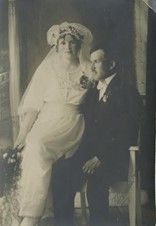
Figure 23: Fritz and Lilly’s wedding photo, July 1921
Frans Gustaf, the father in the Skarven house, wants to build a home for Fritz and Lilly. But he initiates the plan without full compliance of the couple. And yet, with the focused energy from four strong boys they build a strong house along Storbäcken very fast. The inheritance contract states that Fritz and Lilly would oblige themselves to ten years of serious debt to the Johanssons’ family, and then, they still wouldn’t own but half of their home. Lilly has her sister Ester, ten years older, who suffers under this type of contract in Gunnarn. So, she refuses outright this arrangement, and the young couple begins a search for their own place. Frans Gustaf, disappointedly, saves the fine new house for another son. With her salary as teacher and his abilities in construction, Lilly and Fritz qualify for a loan and borrow some money to build on a lot in the middle of Stensele: 49 Blå Vägen on the blue highway.
In 1920, the Johanssons call Dr. Quantrell to Skarvsjöby to help little Sören. He charges them two hundred kronor (crowns) even though the appendicitis operation fails and the thirteen- year-old boy dies. The baby in the Ljung family, Arvid attends school in Vindeln, below Vännäs and towards the coast, in 1920. Anders August Ljung begins dealing out the money he has saved. He has accumulated a decent sum and intends to reward his children who remain in the locality. Arvid uses this money to pay for his schooling, Lilly receives a thousand crowns which pays off their lot, and Fritz begins to plan for construction. He writes plans for a giant two-story modern tenement house on Blå Vägen – for the commercial and community value of a situation (like a station) on the blue highway.
With the shortage of living space in town, the Stensele community fails to meet the demands of these new twentieth century businesses who were moving in young families to work. This assigns a rush to Fritz’s work on a tenement house, while the money still moves slowly for farmers now working in Stensele, the town with a post office, railway station and probably some form of banking, with supplies and commercial connections coming from Lycksele. Arvid returns to Lönnberg, and the summer of 1921 pushes the new generation through an eventful period. With his enthusiasm for books and writing, Arvid works for the Ume newspaper (Ume Bladet) and dreams of America. Along with Fritz, they send in articles to share news on the Stensele “socken” in a growing progression of community activities. Fritz accelerates his work on the blue highway tenement house, after he helps his brother build the hydroelectric power station in Skarvsjöby.
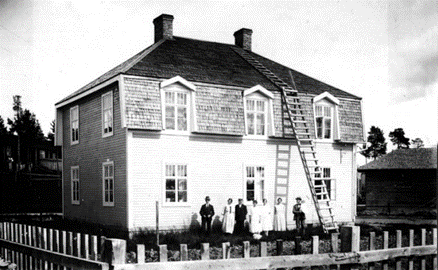
Figure 24: the house on Blå Vägen (1921)
For this nybyggare power plant, Robert brings plans from a Scania subsidiary in Vilhemina, which the little village finds ten investors to support. They wager everything to complete this innovative project. The promise of lights and electric power in 1921, of course, convinces people easily confused and greedy for modernity, but the simple farmers flail when the costs escalate, and bankruptcy threatens completion. Luck and persistence win the day, however, and they have the first hydroelectric power plant in Lappland right here in Skarvsjöby before my father is born (1924).
The Scania design, popular in southern Sweden, brings light to the Lappland forest in these early days, but the business of managing a system efficiently and effectively proves to be overwhelming for these farmer families. They build the little house for the generator in the woods a third of the way down the Skarven hill. A three-hundred-meter wooden tube (wooden canal?) with a twenty meter’s vertical drop, follows the “Lillabäcken” from the dam at the end of town down towards Storbäcken and the generator, on the ground cleared for turbines and collectors. Fritz leads the construction crew and Aron works with an engineer from Scania on the technical operation (and surely my father Erik helps out as a young, enterprising engineer). Aron takes over management of the plant when it fires up the village. He finally buys out one of the ten original shares in 1930. But the operation never gains a profit. The potential seems tremendous, but generosity and general ignorance of profit margin economics and good accounting practices keeps the Skarven power plant a low key, high budget operation (or is it a community non-profit?).
Primarily, they fail economically, because when the lines connect Stensele to the national Swedish power grid in 1924, no one capitalizes on their neighbors, and the State takes over. After the initial excitement of lights, in another successful venture, the kommun built a saw powered by the electric current. Aron manages this operation as well. But they compete with simpler water powered saws; and the influx of small motors everywhere, when Stensele bends to hold fast with the industry blooming timber business burgeoning, with potential riches flowing out of the lumber scene on the Ume River, but also in Stensele. Fritz gains some fine timber from the Skarven mill for his new house in Stensele assuredly. Skarven hurries to initiate an inevitable invitation to be sold, and the State in the form of Statens Vattenfall buys the whole operation by 1935 and shuts it down in 1950. Meanwhile, Fritz travels from old home in Skarvsjöby to new home in Stensele and brings two brothers back to help finish the tenement house on Blå Vägen. The big day for Fritz and Lilly finally arrives in Stensele. Weddings in September 1920 compete only with picking potatoes from the ground and cutting wood for the winter’s fire supply. So, Lilly and Fritz keep their formal wedding affair low key since they already consummated in July. No matter here, for they leave the old ways behind, as their children grow up and leave Stensele, they survive on the promises of the future, maybe not in Lappland, but progress progresses and så vidare.
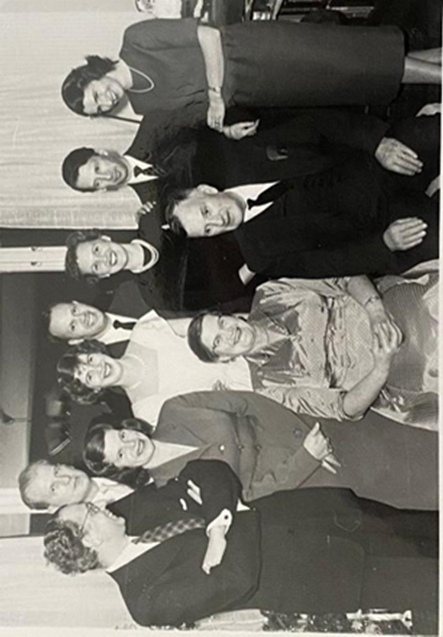
Figure 25: Lilly and Fritz in 1958 with their children and spouses
X. References for this work
These were the people Anders interviewed in 1983 who provided firsthand accounts of their family stories.
1. Irene – one of Farmor’s sisters. Lived in the shack in Lönnberg.
2. Alfred Johanson, says it’s one of Pere’s many first cousins. Son of Robert maybe. Johan Alfred Johansson (1918-98), son of Jenny Sofia, one of Farmor’s sisters, maybe Elsie is his wife.
3. Johan Anderson who had the key for Boxan, is a relative, a son of Johan August Andersson (1874-1949), Farmor’s oldest brother maybe.
4. Henning and Hilda Young – Henning (Johan Henning Ljung) is the son of Farmor’s oldest brother Johan August Andersson. Lived in the old family house, inherited the property somehow. They had the farm in Lönnberg.
5. Rolf Robertson – another first cousin and son of Fritz’ older brother Robert Johansson.
6. Knut Fällstam – one of Fritz’ younger brothers.
7. Torra and Kalle Lindahl. Torra is another daughter of Johan August Andersson, the oldest brother of Farmor, and Kalle Lindahl did the many figure carvings.
8. Karin Stenstedt
9. Karl Johan is a name of the mushroom and my best friend in Linnköping.
10. Ester Sahlman
XI. Ancestors mentioned back to Erik’s 4 grandparents
Fritz Johansson – author’s Farfar (1893-1963) Fritz Johansson’s parents:
Frans Gustaf Johansson (1871-1925)
Tekla Charlotta Sjöberg (1869-1949)
Fritz’s siblings
Robert Johansson (1895-1949)
Son Rolf Robertson – REFERENCE Aron Johansson (1898-1948)
Per Hugo Johansson (1899-1961) Johan Ragnar Johansson (1902-67) Gustaf Erhard Johansson (1903)
Knut Valter Johannson Fällstam (1906-1991) – REFERENCE
Wife Anna (1909-99) – REFERENCE
Sören Johansson (1907-19)
Torra Johanna Johansson (1909-10) Karl Teodor Johansson (1911-65)
Lilly Charlotta Ljung Stenstedt – author’s Farmor (1894-1978) Lilly’s parents:
Anders August Johnsson Ljung (1844-1922)
Johanna Alexandra Ljung (1854-1939)
Lilly’s siblings:
Johan August Andersson (1874-1949)
Wife Ester Victoria (b. 1881)
Son Johan Anderson REF?
Son Johan Henning Ljung (1911-) REFERENCE
Son Torra and Kalle Lindahl – REFERENCE
Pehr Alfred Ljung Berglof, aka “Uncle Al” – (1877-1972)
Victor (Viktor) Frithiof Emmanuel Ljung/Young (1879-1969)
First wife Anna Brit?
Second wife Ester Marie Young (1877-1964)
Jenny Sofia Alexandra (1881-1959)
Son Johan Alfred Johansson (1918-98), wife Elsie REFERENCE
Ester Marie Ljung Holmner (1884-1969)
Husband Victor Emanuel Holmner (1885-1955)
Axel Erhard Andersson (1887-1963)
Hugo Nicholaus Ljung Young (1890-1962)
Stillborn girl 1893
Irene Elisabeth (1897-1990) – REFERENCE
Husband Tule Immanuel Karlsson (1899-1966)
Isak Arvid Ljung Young (1899-1942)
Lilly’s & Fritz’s Children
Åke Gustaf Stenstedt (1922-1969)
Wife Karin Stenstedt – REFERENCE
Erik Anders Stenstedt (1924-2007)
Wife Dorothy
Daughter Emmie Lee
Son Anders Erik – the author
Son Lars
Daughter Katarina
Barbro Marianne
Märta Greta Deines (born Stenstedt)
Lars Gustav Adolf
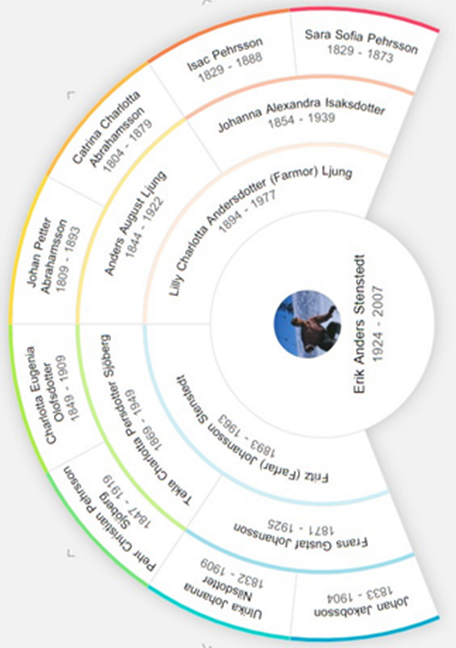
Figure 26: the ancestors of Erik Anders Stenstedt
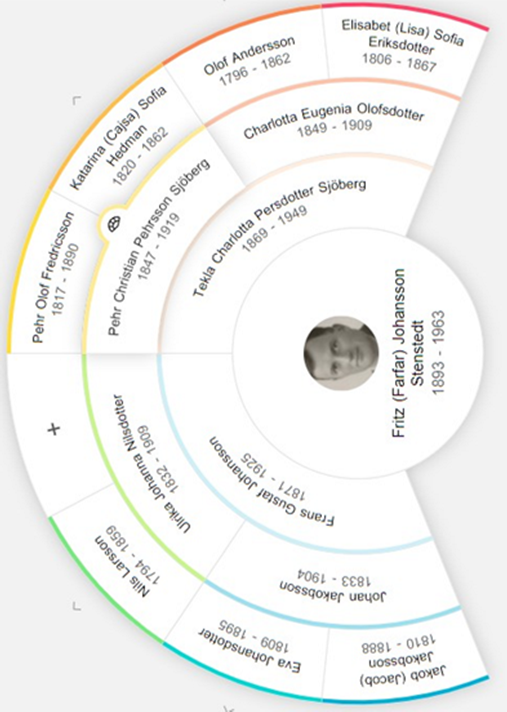
Figure 27: the ancestors of Fritz Stenstedt
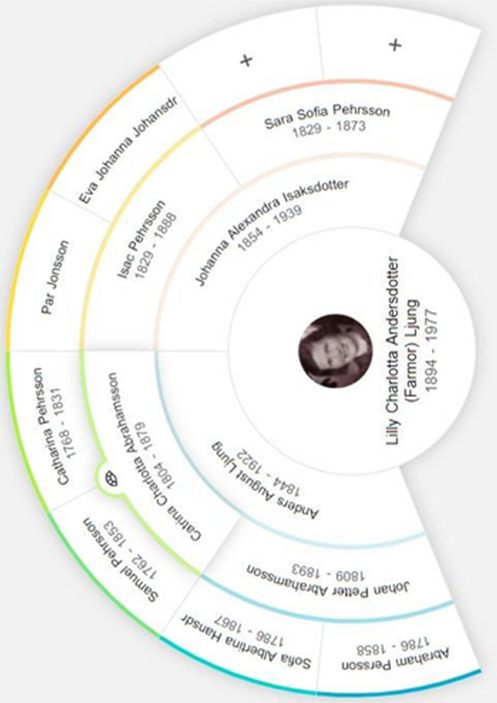
Figure 28: the ancestors of Lilly Stenstedt
XII. Afterword, addendum, extras
Historien om boxan 1(1-3) from Barbro (syster till Erik, min far).
Min Pappa Fritz f. i. Skarvsjöby 1893(-1963)
Var inskriven i skolan 1901-08 då han fick avgångsbetygs efter 4 års skolgång; vartannat år.
Han fick tidigt vara med i skogsarbet och var med och timrade Boxan – Stugan. Enligt en inristning på dörren – 1907. Den restes på en fäbovall där Skarvsjöbornans har belåte på sommaren och skogsarbetarna rastade på vintern. Väggerna i storstugan ”tapetserades” med tidningspapper för att beholla värmen inomhus.
Till slut monterades stugan ner med numrerade stockar, den hade inte samma behov efter ett obekan antal år. Stockarna lagrades för senare behov.
Fritz och Lilly blev bekanta i Lönnberg där Lilly (f. 1894-1977) bodde. Fanns ignen skola. Det kom en läskriv – och rälsningskunnig person som stannade en termin och 6 veckor. då hon hade läst ut allt vad hon kunde till barnen i Lönnberg.
Fritz magister hade et litet bibiiotek och han fick låna böcker av Magister Bergström som Lilly fick läsa. 1913 sökte Lilly plats på Småskollärare sem. i Lycksele och 1915 var hon utbildad lärare. Fick arbeta som lärar på arbetstuga –
Vi barn och våra kamrater var mycket ofta – tidvis jämt – i Boxan. Pojkarna had regel båt, inomhus grammofon med skivor och kortspel av olika slag. Öppen spis, i köket sparspisen och en liten källare under golvet. Över och undersänger både I köket och i förstugan.
Till slut ville stiftels skogsförvaltning ha bet. för arrende, som övertogs av Lilly när pappa dog.
Speciella händelser som jag varit med om var 1938 då hela Umeälven var drabbades av ett ovanligt stort vårflods översvammning.
1945 solförmörkelse när jag var där ensam – fåglarna tystnade.
1942 drunknade Lasse i Boxan-bäcken, jag gick då på Vindelhus folk högskola.
Lilly blev erbjuden att köpa marken men hon var inte intresserad och hon berättade ingenting till oss barn.
1972 hjatade jag mig till att få överta arrende kontraktet Lilly trodde inte det var något att ha. Stugan ombyggd 1987. Friköpte marken 1995. Grannen Gustav Walfridsons hus rivs 1996? Olle köpte av mig. Han var med i Boxan kronorss.
På 1940-50? talet när Umeälven skulle reglas med kraftverks i Storuman och Forsviksdammen hade de räknat ut att Boxanstugans udde skulle försvinna. Pappa fick ersättning för att flytta stugan till annan plats. Kanske 250k? Men han hade ingen brådska “Ja vänt” sade han.
Vid närmare kontroll av vatten-nivån i Stenselet visade det sig att begravningsplatsen i Stensele skulle skada vid så högt vatten nivå. Så stugan kunde stå kvar som förr och Stenavans vackra vattenspegel skulle bestå. Men jag vet att Stenavan gör rätt för sitt namn. Här är stenigt.
Anledning
Här skriver jag igen.
Vad ska jag skriva? Lagar, regler och rättvisa, det måste jag förklara, för mig själv, även om inte någon vill läsa. Jag fortsätter på denna skäl.
Den som etablerar regler har kontroll – anledning till min punkt. Äljes kvinna eller män, de som etablerar regler har kontroll. Oftast genom den tiden som vi kallar för civilisation, mannen med hjälp från Gud – som liknar männen – Gud säger vad är rätt, eller fel. Så börjar rättvis kontroll ifrån de som tror de har det rätta ord, från den enda Guden,bara den Gud, den ord, den tro. Eller hur?
Kommunen följer guds regler, det är Guds lag (eller hur?); och dem som inte vil följa Guds lag får straffen – så där kör vi rättvis systemet (eller hur). Systemet heter regering, styrelsen och demokrati. Idag har vi mäst byggat regering med lagar (systemet) utan Gud, men även så, Guds lag sitter där bakom det som vi kallar sekulär regering, på alla olika lander med sekulär lag. Och därför alla människor skall respektera med nåd, alla gudomlig slags tro, med alla möjliga regler. Eller hur?
Förstås, ingen kan säga vilken slags Gud har rättvis och sama meningen för allihopa, alla människor (och kvinnor) här på jorden med så många olika länder, det tror jag inte. Istället, har vi krig och vi slåss över vilket lag skall bedömma.
Ifrån kristlig kommunen, jag själv vet vad det står i Bibeln. Det är den ända ordet, den ända bok och Guds lag kontrolerar allt. Det säger nästan precis samma saken i Quran (pbh).
Men jag tror inte på Bibeln (tror inte på Quran heller). Jag tror inte att dem kan säga rätt på allting på allvar, och systemet att rättvisa med Guds lag är faktist fel ock denna kristlig systemet (tilochmed Islam) har gjort mera ondo, över tiden.
Svenskar måste åtminstone ha kommit till slutsatning, med goda skäl, att man kan leva i fred, med folk idag, med kontroll ock rättvisa med varandra utan Guds lag.
Kanske det räcker för idag.
Skall vi fortsätta? Gud’s lag bestämmer. Även om vi folk kan inte säga säkert, det bästa vi kan säga är vor tro – vi tror på Gud, tror på hans historia, tror på hans lag, tror på hans planer. Tro på framtiden utan Gud, säger jag.
Mina systrar, dem tror på Gud, sonen ock heliga ande, som det säger i Bibeln. Dem tror på den eviga livet äfter döden. Dumheter är det inte. Jag respekterar dem på allväl. Dom är mycket klokare än mig. Dom känner till siffror, mathematik ock datorer. En kämpar till att kolla data för en stor elfabrik. Mycket klok är dom. Skillnad mällan oss, det är att deras tro är inte lik min. Så kör vi.
hedlidande har vi både och. Medlidande för mig menar att jag skall tänke på andra folk. Jag vet hur lycklig jag är, och tänker ofta om skillnad, gränser mellan os folk.
Jag skriver mera kanske någon annan gång.
Svenska skrivande
Jag orkar inte skriva här, men jag gör det endå. Klockan är tre på morgon här i Sverige.
Det som jag undrar kommer ifrån denna philosophi och historisk utveckling av låg som bestämmer privata egendomsrätt över land och ting. I Romana tider börjada tanken att människor kan äga saker som land och slav. Sen, var det feudal system som gjorde klassifikation, med låg som delade upp skillnad mellan dem som har rätt att äga och dem som får inte rätt at äga. Det var Kyrkan som bestämmde låg med Kungen’s rikdom som sprang med denna ide.
Nu för tiden säger vi att alla har samma rätt, men fortfarande klassifkation bestämmer och skillnad mellan de som har och de som har inte bara ökar. Vad skall vi göra? Hur kan vi uppleva detta ide att alla har samma rätt men vi är inte lika rik, eller stark, eller kloka. Vi är alla olika. Vi har olika bakgrund, och de som har är inte lik de som har inte.
Allemannsrätt betyder att jag kan promenera i skogen utan att bekymra mig om privata gränser och jag måste vara försiktig om naturen. Men jag kan inte jaga eller ta en gran för Jul utan tillstånd. Jag förstår.
Till slut, nu skall jag skriva om min Farfar. Här var skriven i tidning Västerbottens-Kuriren (VK) 17.5.1943, så här
Den 19 maj fyller byggmästaren Fritz Stenstedt, Stensele, 50 år. Stenstedt är född i Skarvsjöby, där han var äldst I en stor syskonskara, 9 pojkar, varav en avled 12 år gammal men alla de andra äro I livet. Det var ej möjligt att alla dessa pojkar skulle stanna hemma på faders-hemmahet, utan en del gav sig ut. Fritz flyttade till Stensele år 1921 och började åta sig byggen. Dels var han med som snickare, dels uppförde han på entreprenad flera byggen under inlandsbane – och tvärbanebyggets tider. När den stora ekonomiska krisen kom vid 1930-talet, lade han om sin verksamhet, då den var mindre lönsam på grund av konkurrensen, och var då flera år sysselsatt som kontrollant för flera stora byggen, såsom prästgårdsbygget I Tärnaby, tullstationen I Strimasund, sjukstugan I Stensele och en del arbetsstugubyggen. År 1933 förordnades han till ordförande för taxeringsnämnden I Stensele. Det var nog många som trodde han skulle gå bet på det maktpåliggande uppdraget, men det har gått överhövan bra.
Stenstedt började förresten tidigt med kommunala sysslor och updrag. Redan vid fullmäktigeinstitutionens började 1918 var han bland dem, som då invaldes, och när folkskollärraren Hugo Bergström avled, övertog Stenstedt hans plats som arbetsledare och ordförande I direktionen för vägbyggnaden Skarvsjö-Skarvsjö fäbodar. Detta var ett svårt uppdrag mitt under kristid och högkonjunktur, men han klarade det med heder. Att uppräkna allt vad Stenstedt varit med om I det kommunala är inte lätt. Nu är han familjebidragsnämndens ordförande, vice ordförande I municipalfullmäktige i Stensele samt hälsovårds- och brandstyrrelsens ordförande för Stensele.
Stensele sjukstuga har I Stenstedt haft en driftig ledamot av styrelsen, och som ordförande I styrelsen vill han väl vårda och utveckla denna gren av landstingets uppgifter I lappmarken. Den kooperativa rörelsen har I Stenstedt haft en varm annhängare. Redan 1916 anslöt han till rörelsen, som han sedan tillhört oavbrutet, numera som en av toppfigurerna I Övre Umans konsum.
Med sin duktiga makas hjälp har Stenstedt skaffat sig ett präktigt hem, och I den trevliga sommarstugan vid Umeälven, närmare bestämt Boxan, finner man honom ofta när han skall ha en ledig stund.
Redan som ung pojke började Stenstedt skriva korta notiser I Västerbottens-Kuriren, och det fortsätte han med alt flitagare. Han har I många år varit V.-K:s lokal redaktör I Stensele socken, och om hans insatser I den egenskapen kunna vi utan tvekan vittna, att han är en mycket nitisk och energisk medarbetare, vaken och påpasslig. Stenstedt är rätte mannen på den posten, ty under sin mångåriga verksamhet har han nog lärt känna varenda gård I sin hemsocken. Att hans arbete I tidnings tjänst krönts med framgång, därom är också V.-K:s stora upplaga I Stenselebygden ett vittnesbörd.
Stenstedt är orädd och rättfram I sitt uppträdande. Det kan hända, att han råkat stöta sig med en del, men hans goda vänner äro så många fler. Han är rask och rörlig och ung I sinnet. Västerbottens- Kuriren hyllar honom hjärtligt och tackar honom för utmärkt arbete och gott samarbete. Det skall fortsätta länge än, hoppas vi.
Vem Kontrollera Här
Det här är fint stelle, så, jag skriver gärna. Och med dator här på telefon, skrivbord och mus på bluetooth, jag skriver lätt, men ofta fel. Som voluntär här på Sjukhus i Oakland, CA, jag skriver och det brinner nästan överallt här i Kalifornien.
Föräldrar till hustru till min bror (Lars), de har stort land i närheten “Camp Fire“ branden norr om oss, här I Berkeley, CA, men absolut förskräglig. We are very worried.
Min kompis Richandebauche, han har massor med land norr om denna brand – Camp Fire. Söder i Malibu är det mera förskräglighet med brand. Usch dah.
När jag hör folk säga, liksom vår POTUS (Pres of the US) på den tiden har sagt, om möjlighet att Gud kommer tibaka till Jorden med detta förskräglige brand, då måste man undra. Det är inte bara jag som undrar.
Vad skall vi säga? Gud som haver barnen kär . . .
Är det rätt eller fel? Gud kontrolerar allt. Är vi inte klok, noga ock kunning? Vem kontrolerar här?
Vem kontrolerar? Jag vill inte bli kontrolerad, inte als. Jag måste följa regler, men vilka regler? Det är fråga. Vilka regler måste jag följa ock vilka regler kan jag strunta på? De som har pengar, de som skriker högst, det bestämmer ofta. Här på sjukhuset som voluntär, försöker jag kontrollera hur att sortera skräp. Det är roligt att leka med kontrol, som jag tycker. Annars fins det inte mycket kontrol här, i värden och där jag sitter som voluntär.
Flickor tänker ofta de måste kontrollera husholden. Män pluggar, kjejer klarar hemmet. Så har det blivit nästan i alltid som det stor i Bibeln ock Bibeln har kontrolerad för länge. Kontrol. Det är min fråga.
De som kontrolerar bestämmer regler folk liksom mig behöver följa. Därför söker jag styrelsen. Kvinnan gjust frågade mig “Do you work here?” “Nej” svarade jag. “I’m a volunteer” sade jag. Hon var faktist inte intreserad och stak iväg.
En sak till måste jag berätta. Min kusin från Sverige kom sista veckan, gjust nu på början av November. Han var med på alt. el. konferens som min syster ordnad här I Kalifornia. Det var så mycket intresant ock det kostade han bara $300 (tre hundra dollar). Han flög med Lufthansa ifrån Stockholm till Oakland, CA direct, fram och tillbaka, ock biljeten kostade bara $300. Han fick rum ock bord ifrån syster man, åkde med mig fram och s Buckhorn på Torsdag den vecka.
Nu skall jag börja skriva om min Iran resa som jag gjorde i 2017.
Jag åkte till Stockholm direct ifrån Oakland, CA, stannade fyra dagar i Sverige, sen flyg till Iran, igenom Turkiet, först stannad i Istanbul, där fick jag prata med Darius, min son, på Skype.
Flög intill Tehran klockan tre på morgon, hell mortgage bad det. Oops. Jag vill säga. Helt mörkt ut
Först gubben frågade mig: vad gör du här? Ingen skylt some sade någon välkommen. Nej, kjejen i svarta skylt (skarf/chador), hon var förlässen at jag hade alla mina papper helt färdig (tack ambassaden I Sverige). Så, fick jag grön lampa, och så gick jag ut i början på nattens slut intill Tehran.
“Taxi taxi” ropade gubbrna. “Nej” tack sade jag. Jag will ha gul taxi svarade jag. Fint gjort, jag slå mig in till den nya, snygga, gula taxi. Hur mycket skall det här kosta, frågade jag gubben. Nej, män titta här sade han. Jag har meter. Och jag har address, sade jag, på min bästa Farsi språk.
Nu körde vi intill stan, den samma Tehran där Jag var en gång tidigare. 1976-77, då var det tiden jag besökte i Tehran äftersom min far var där för hans arbete med Bechtel Corp. Här i 2017, Tehran var där i solen som började dagens ljus. Bilar, vägar, men jag såg nästan inte någon ting.
Addresse Khanome familje vän, medanne Argentin, khiabune Alvand, kuche Avis. Detta address skrivit på Farsi det fungerade jäkla bra för mig. Varenda gång jag tappade väg, hade Jag address lappen – hej khanom Joon. Salam. Che toree? vogand några ord kan jag på Farsi.
Först fick Jag sömna. Härligt som det var, det var också morgon i Tehran på min stor resa. Min vänlig kvinna, khanom hade cell telefon för mig, men vi moste köpa simkort, och vi tänkte, kanske jag kunde lämna pengar med en bank och anvenda debit kort. Nej, sade bankman gubbenK det får du inte. Ok ut gick vi
Med lokala pengar (Rial, Toman, miljarder), address lappen, cell phone Jag var färdig att slå mig ut i Tehran som jag kanske skulle komma ihåg.
Jaleh lämnade mig i taxyn med tree andra folk, på hollet tunnelbana (metro) station. Fan, vad jag kunde och på dem flera gånger jag tappade väg, jag fick bara visa någon den address lappen (skrivit på Farsi), medanne Argentin, khiyabune Alvand, kuche Aviz. Jag hittade sådant jette mycket attraktiv, intresant, och det som jag lärde mig. Gammalt det är, alt om Iran går bak tusentals år.
På min resa fick jag besöka Tehran, Qom, Kashan, Abyaneh, Lut desert, Esfahan, Yazd, Pasargade (tomb of Cyrus), Persepolis and Shiraz. På slut vill jag tilbaks med Stensele.
Sponsors


Even after all this time
the Sun never says
to the Earth
“You owe me.”
Look what happens
with a love like that.
it lights the whole sky.
-Hafiz
NIAC Action
NIAC Action is dedicated to building political power for the Iranian-American community to advance peace & diplomacy, secure equitable immigration policies, and protect the civil rights of all Americans. NIAC, the 501(c)(3) sister organization of NIAC Action, is dedicated to educating & engaging the Iranian-American community in order to further advance these priorities.
Online Extras
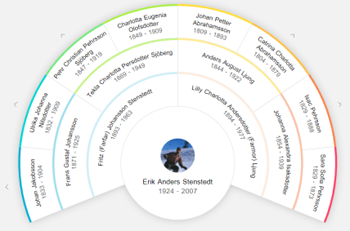
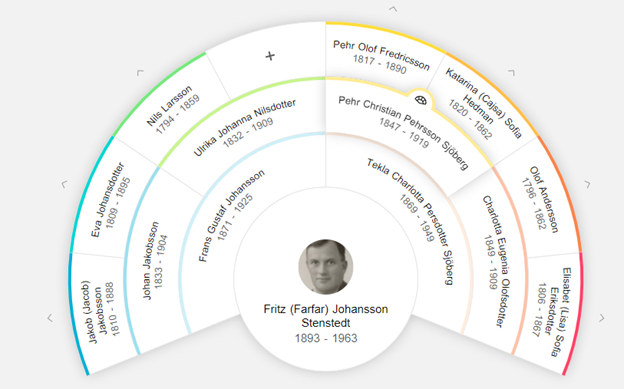
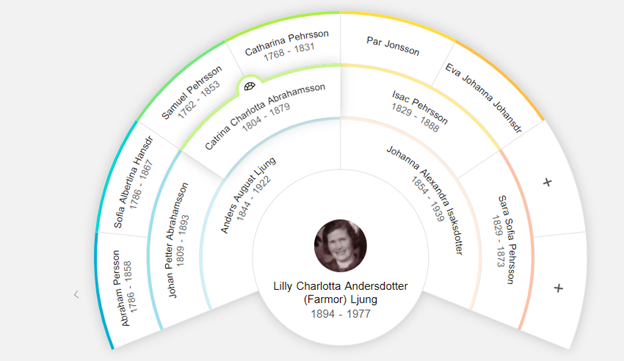
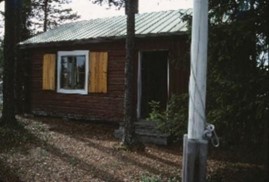
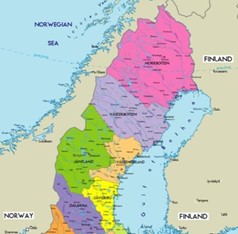

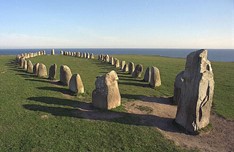
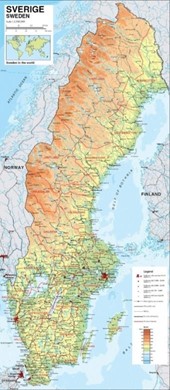
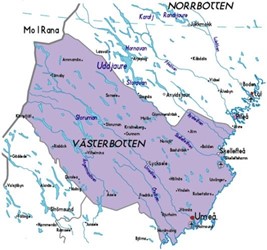
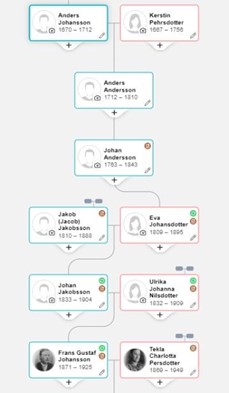
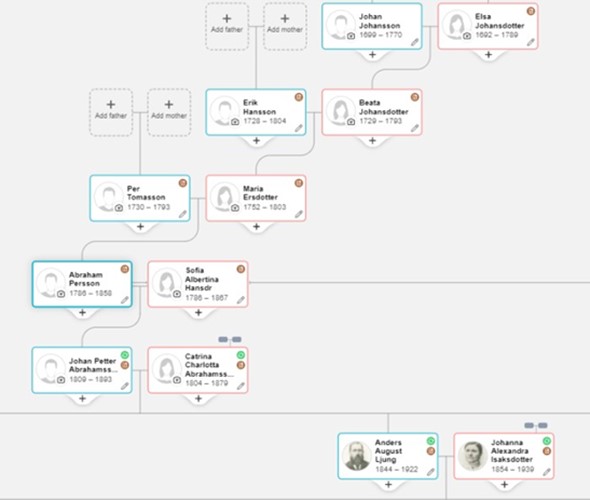
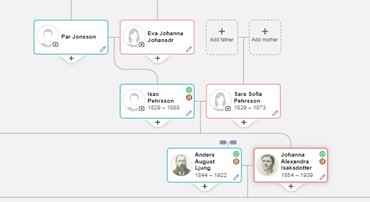

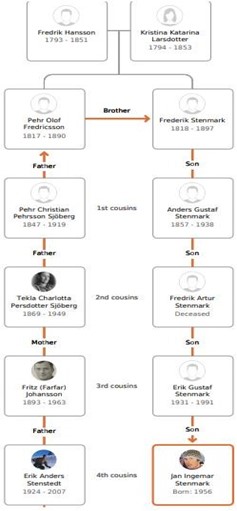
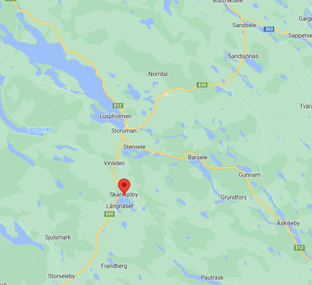

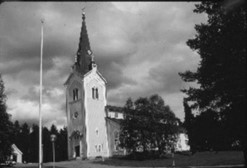

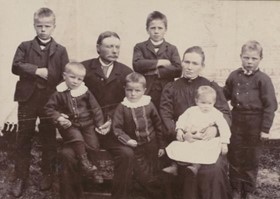
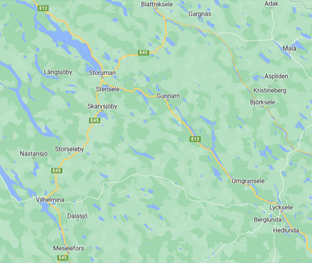

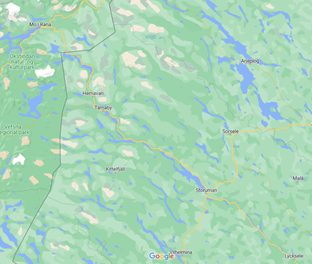


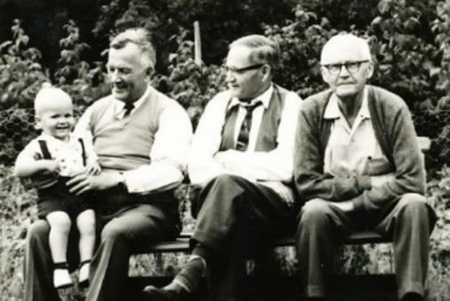
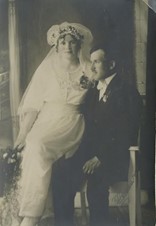
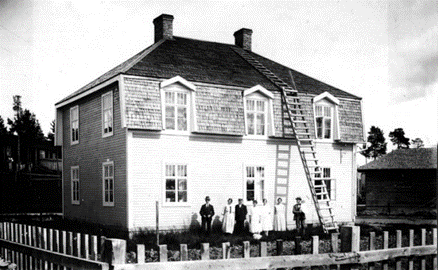
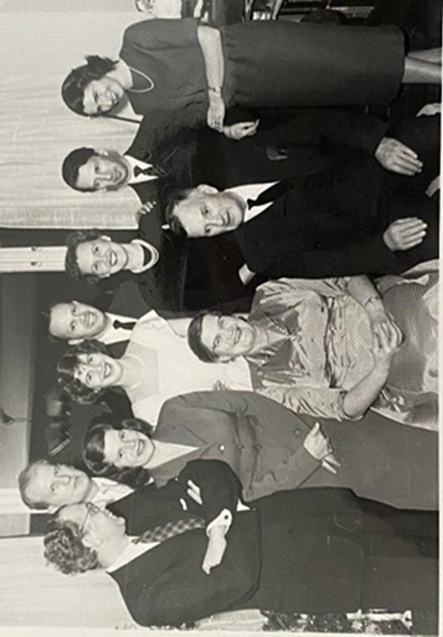
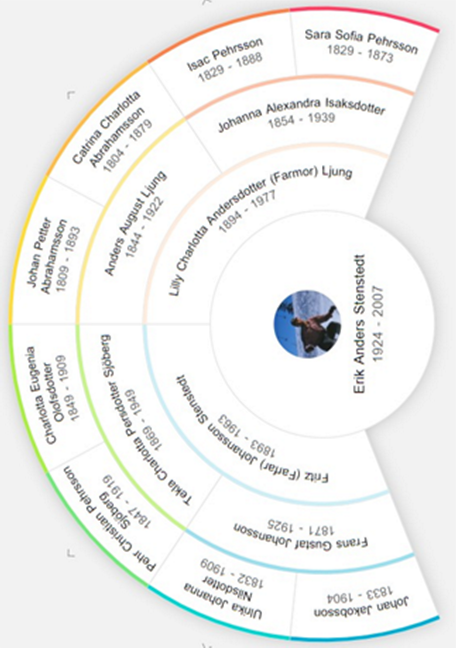
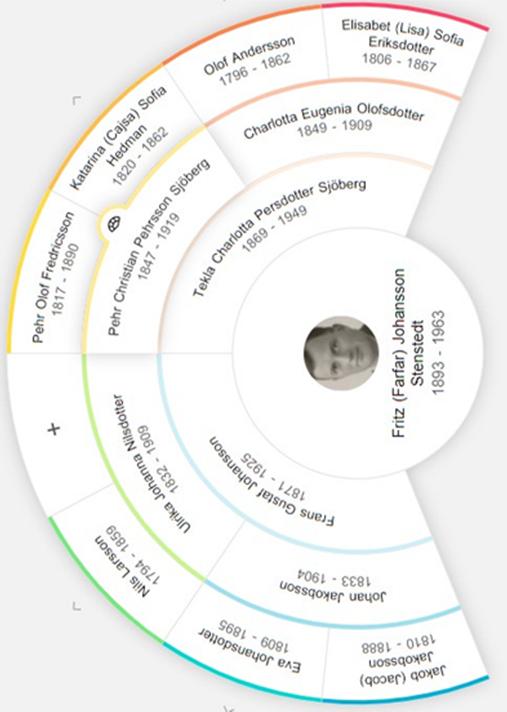
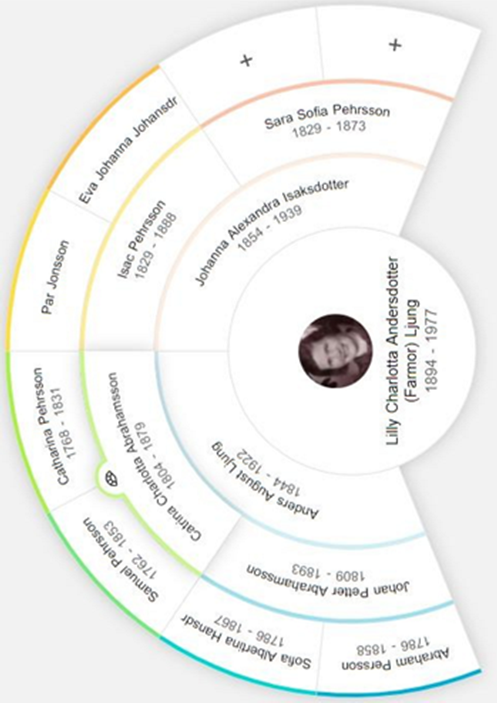



 Stenstedt family history site
Leave a comment